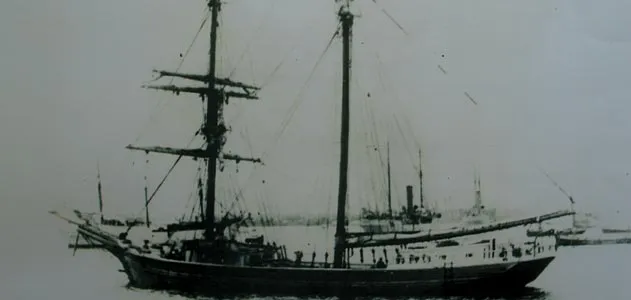
The Ghost Ship’s Unsolved Voyage: The Mary Celeste

ppr-revolution.com – The story of the Mary Celeste is one of the most enduring mysteries in maritime history. This ghost ship, found abandoned under mysterious circumstances in the Atlantic Ocean in 1872, has fascinated historians, sailors, and the general public for over a century. The Mary Celeste’s voyage and the events that led to her abandonment remain one of the greatest unsolved mysteries of the sea.

The Voyage of the Mary Celeste

The Mary Celeste, originally named Amazon, was a British-American merchant brigantine. On November 5, 1872, she set sail from New York Harbor under the command of Captain Benjamin S. Briggs, bound for Genoa, Italy, with a cargo of 1,701 barrels of alcohol. Accompanying Captain Briggs were his wife, Sarah, their infant daughter, Sophia, and a crew of seven.

The Discovery

On December 5, 1872, the Mary Celeste was discovered by the crew of the British brig Dei Gratia, under the command of Captain David Morehouse. The ship was found drifting aimlessly about 400 miles east of the Azores, with her sails partially set and no one on board. The Dei Gratia’s crew boarded the Mary Celeste and found her in an eerie state. The ship’s lifeboat was missing, and there were signs of a hasty departure, but there was no sign of violence or struggle. The cargo was intact, and the ship was seaworthy, with no apparent reason for the crew to abandon her.

Theories and Speculations

Over the years, numerous theories have been proposed to explain the mystery of the Mary Celeste. Some of the most popular include:

  • Explosion of Alcohol Vapors: One theory suggests that fumes from the alcohol cargo ignited, causing the crew to panic and abandon ship in haste. However, there was no evidence of an explosion or fire on the Mary Celeste.
  • Collision with Another Vessel: Another theory posits that the Mary Celeste collided with another ship, which could have caused the crew to abandon ship. However, there were no signs of a collision, and no other vessels reported such an incident.
  • Mutiny: Some have speculated that a mutiny occurred on board, leading to the abandonment of the ship. This theory is largely discredited due to the lack of evidence of a struggle and the fact that the cargo was left untouched.
  • Natural Causes: Some believe that a natural event, such as a waterspout or a rogue wave, could have caused the crew to abandon ship. However, the Mary Celeste was found in good condition, which makes this theory less plausible.

The Official Inquiry

An official inquiry was held in Gibraltar to determine what happened to the Mary Celeste. The inquiry concluded that the ship was abandoned under mysterious circumstances, but no definitive explanation was provided. The ship’s owner, James H. Winchester, was found negligent for not properly securing the hatches, and he was ordered to pay the insurance claim.

Legacy

The Mary Celeste’s story has inspired countless books, articles, and films, and it remains one of the most famous maritime mysteries. Despite extensive investigation and speculation, the true fate of the Mary Celeste and her crew remains a mystery. The ship herself was sold and renamed several times, eventually being lost at sea in 1885, adding another layer of mystery to her already enigmatic history.

The Mary Celeste serves as a reminder of the dangers and uncertainties of life at sea. Her story continues to captivate the imagination, a ghost ship whose final secrets may never be fully unraveled.

True Crime Story of a Family’s Revenge: The Legacy of Terror

ppr-revolution.com – In the annals of true crime, few stories are as chilling and complex as the tale of a family’s quest for revenge, a narrative that unfolds like a Greek tragedy, woven with threads of betrayal, violence, and the relentless pursuit of justice. This is the story of the Smith family, whose lives were irrevocably altered by a heinous act of violence, and their subsequent journey down a path of vengeance that would consume generations.

The saga began on a seemingly ordinary day in the small, close-knit town of Millfield, where the Smiths were well-respected members of the community. John Smith, a successful businessman, and his wife, Mary, were the proud parents of two children, Sarah and Michael. Their idyllic life, however, was shattered when John was brutally murdered in a botched robbery attempt. The perpetrator, a local man named Thomas Reed, was quickly apprehended and sentenced to life in prison.

But the story did not end there. The Smith family, devastated by their loss, found little solace in the justice system’s verdict. As the years passed, the pain of John’s absence festered within them, morphing into a deep-seated desire for retribution. Sarah, in particular, became obsessed with the idea of avenging her father’s death. She began to meticulously plan her revenge, a plan that would ultimately span decades and ensnare not only Thomas Reed but also his family.

Sarah’s first step was to infiltrate the Reed family, gaining their trust under the guise of forgiveness and reconciliation. Over the years, she wormed her way into their lives, becoming a confidante to Thomas’s son, David. Unbeknownst to David, Sarah’s every move was calculated, her every smile a mask concealing her true intentions.

As the years passed, Sarah’s plan reached its culmination. On the anniversary of John’s death, she orchestrated a series of events that would lead to the downfall of the Reed family. Using the knowledge she had gained about their lives, she manipulated circumstances to frame David for a crime he did not commit, ensuring that he would be sent to prison, just like his father before him.

The repercussions of Sarah’s actions were far-reaching. The Reed family was torn apart, their reputation in the community ruined. Meanwhile, the Smith family found themselves haunted by the very vengeance they had sought. Sarah, consumed by her quest for revenge, had lost sight of the person she once was. Her brother, Michael, struggled with the moral implications of their actions, questioning whether they had become no better than those they sought to punish.

The legacy of terror that Sarah had hoped to eradicate had instead been perpetuated, leaving a trail of destruction in its wake. The story of the Smith family’s revenge serves as a stark reminder of the complexities of justice and the corrosive nature of vengeance. It is a tale that asks us to consider the true cost of seeking retribution and the unintended consequences that can arise when the desire for justice is overshadowed by the thirst for revenge.

As the years have passed, the events surrounding the Smith and Reed families have become the subject of much debate and reflection. Some see Sarah as a hero, a wronged individual who took matters into her own hands when the justice system failed her. Others view her actions as a tragic descent into madness, a cautionary tale about the dangers of letting vengeance consume us.

Regardless of one’s perspective, the legacy of terror left by the Smith family’s revenge is a testament to the enduring fascination with true crime stories, where the lines between right and wrong are often blurred, and the pursuit of justice can lead us down a path from which there is no return.