
Uses and Hazards: Arsenic in Industrial Processes

ppr-revolution.com – Arsenic, a naturally occurring element, plays a significant role in various industrial processes. However, its use comes with substantial health and environmental hazards. This article explores the applications of arsenic in industry and the associated risks.

Uses of Arsenic in Industry

Wood Preservatives

One of the primary uses of arsenic in industry is in the production of antifungal wood preservatives. These preservatives are used to protect wood from decay and insect damage, but they can lead to soil contamination if not managed properly.

Glass and Electronics

Arsenic is also used in the production of glass, particularly in the manufacture of semiconductors and other electronic components. The compound arsenic trioxide is a key ingredient in the production of gallium arsenide, which is used in high-performance electronic devices.

Textiles and Paper

In the textile industry, arsenic is used in the dyeing and printing processes. Additionally, it is employed in the production of paper, where it serves as a bleaching agent and a sizing agent to improve the quality of paper products.

Other Applications

Arsenic is used in various other industrial applications, including the production of alloys, paints, and adhesives. It is also used in the tanning of leather and in limited quantities as a pesticide, feed additive, and in pharmaceuticals.

Hazards Associated with Arsenic

Health Risks

Exposure to arsenic can occur through inhalation, ingestion, or dermal contact. Chronic exposure to arsenic can lead to a range of health issues, including skin diseases, such as arsenical keratoses and skin cancer. It is also associated with an increased risk of bladder and lung cancer, as well as cardiovascular diseases and diabetes.

Environmental Impact

The use of arsenic in industrial processes can lead to environmental contamination. Mining, ore smelting, and the disposal of arsenic-containing waste can result in the release of arsenic into the air, water, and soil. This contamination can have long-lasting effects on ecosystems and human health.

Occupational Hazards

Workers in industries that handle arsenic are at a higher risk of exposure. Accidents involving large quantities of arsenic, such as arsenic trioxide, can lead to severe health issues through inhalation and ingestion. Protective measures and safety protocols are essential to mitigate these risks.

Conclusion

While arsenic has various industrial applications, its use must be carefully managed due to the significant health and environmental hazards it poses. Proper handling, disposal, and regulation of arsenic-containing products are crucial to minimize risks and protect both human health and the environment.
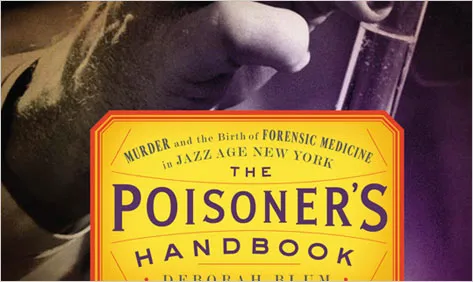
The Poisoner’s Handbook: Murder & the Birth of Forensic Medicine

ppr-revolution.com – “The Poisoner’s Handbook: Murder and the Birth of Forensic Medicine in Jazz Age New York” is a gripping non-fiction work by Deborah Blum, published in 2010. This book delves into the fascinating and often gruesome world of early 20th-century forensic science, focusing on the pioneering work of New York City’s first toxicologists. Through a series of real-life murder cases, Blum explores how the development of forensic toxicology helped solve crimes and save lives during the Prohibition era.

The Birth of Forensic Toxicology

The book begins by introducing the reader to the early days of forensic toxicology, a field that was virtually non-existent at the turn of the 20th century. Blum highlights the challenges faced by the first toxicologists, who had to navigate through a legal system that was skeptical of scientific evidence and a society that was grappling with the rise of industrial poisons and the dangers of bootleg alcohol.

Key Characters and Their Contributions

  • Alexander Gettler: The chief toxicologist at the New York City Medical Examiner’s Office, Gettler was a pioneer in the field. His meticulous work and dedication to science helped solve numerous high-profile cases, earning him the nickname “the Sherlock Holmes of the lab.”
  • Charles Norris: The New York City Medical Examiner who hired Gettler, Norris was instrumental in modernizing the office and advocating for the use of forensic science in criminal investigations.

Notable Cases

Blum brings to life several notorious cases that were instrumental in the development of forensic toxicology. One such case is the murder of Helen Potts, which was solved through the innovative use of toxicological analysis. Another is the investigation into the deaths caused by tainted alcohol during Prohibition, which led to significant public health reforms.

The Role of Science in Law Enforcement

“The Poisoner’s Handbook” underscores the critical role that science plays in law enforcement. Blum shows how the collaboration between toxicologists and law enforcement officials revolutionized the way crimes were investigated and prosecuted. The book also explores the ethical dilemmas faced by early toxicologists, such as the need to balance scientific inquiry with the rights of the accused.

The Impact on Modern Forensic Science

The work of Gettler, Norris, and their contemporaries laid the groundwork for modern forensic toxicology. Blum discusses how their methods and discoveries continue to influence the field today, highlighting the importance of scientific rigor and innovation in solving crimes.

Conclusion

“The Poisoner’s Handbook” is a compelling narrative that combines history, science, and true crime. Deborah Blum’s meticulous research and engaging storytelling bring to light the often-overlooked contributions of early toxicologists. The book not only provides a glimpse into the dark side of the Jazz Age but also celebrates the birth of a discipline that has become integral to the justice system.