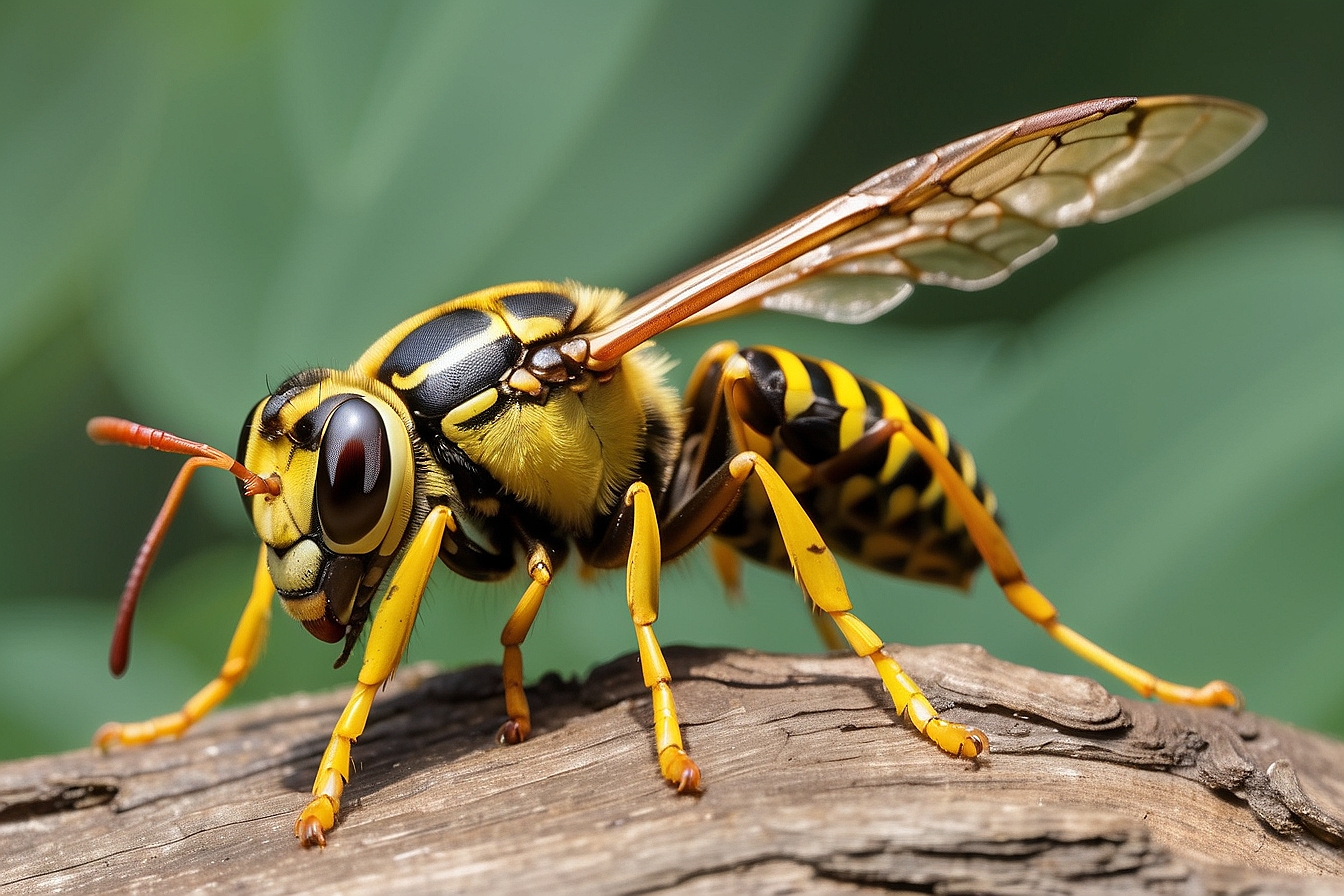
ppr-revolution.com – Wasps, often feared for their sting, are a diverse and ecologically important group of insects belonging to the order Hymenoptera (which also includes bees and ants). While some species are indeed known for their aggressive behavior, the vast majority of wasps play crucial roles in ecosystems as predators, pollinators, and parasitoids. This article delves into the fascinating world of wasps, exploring their biology, life cycle, diverse forms, ecological significance, and interactions with humans.
Physical Characteristics: A Diverse Group with Common Traits
Wasps share some common physical characteristics, although there is significant variation among different species:
- Body Segmentation: Like other insects, wasps have a body divided into three main segments: head, thorax, and abdomen.
- Waist (Petiole): A narrow constriction, called a petiole, connects the thorax and abdomen, giving wasps their characteristic “waisted” appearance.
- Wings: Most wasps have two pairs of membranous wings, although some wingless species exist.
- Antennae: They have antennae that vary in length and shape depending on the species.
- Stinger (Ovipositor): In females, the ovipositor (egg-laying tube) is modified into a stinger, used for defense and paralyzing prey. Males do not have stingers.
Life Cycle: Complete Metamorphosis
Wasps undergo complete metamorphosis, with four distinct life stages:
- Egg: Eggs are typically laid in nests, on or in hosts (in the case of parasitoid wasps), or in other suitable locations.
- Larva: The larvae are legless and maggot-like. They are fed by the adults (or by the host in the case of parasitoids).
- Pupa: The larva pupates, transforming into an adult wasp within a protective casing.
- Adult: The adult wasp emerges from the pupa, ready to reproduce.
Diversity and Classification: A Vast and Varied Group
Wasps are incredibly diverse, with tens of thousands of described species classified into various groups:
- Social Wasps: These wasps live in colonies with a division of labor, including queens, workers, and males. Examples include hornets, yellowjackets, and paper wasps.
- Solitary Wasps: These wasps live individually and do not form colonies. Examples include mud daubers, potter wasps, and digger wasps.
- Parasitoid Wasps: These wasps lay their eggs on or in other insects or arthropods. The wasp larvae then consume the host, eventually killing it.
Habitat and Distribution: Found in Diverse Environments
Wasps are found in a wide range of habitats across the globe, from forests and meadows to deserts and urban areas.
Feeding and Diet: Diverse Feeding Habits
Wasps exhibit diverse feeding habits:
- Predators: Many wasps are predators, feeding on other insects and arthropods.
- Nectar Feeders: Some wasps feed on nectar and pollen, acting as pollinators.
- Scavengers: Some wasps scavenge for food, feeding on carrion and other organic matter.
- Parasitoids: Parasitoid wasps feed on their hosts, eventually killing them.
Behavior and Social Structure: From Solitary to Social
Wasps exhibit a wide range of behaviors:
- Nest Building: Social wasps build complex nests from paper-like material made from chewed wood pulp. Solitary wasps build nests in various locations, such as mud nests, burrows in the ground, or cavities in wood.
- Social Behavior: Social wasps exhibit complex social structures with a division of labor.
- Hunting and Foraging: Wasps use various strategies for hunting and foraging, depending on the species and their prey.
Ecological Roles: Predators, Parasitoids, and Pollinators
Wasps play crucial roles in ecosystems:
- Pest Control: Many wasps are important natural enemies of agricultural pests, helping to control their populations.
- Pollination: Some wasps are pollinators, especially for certain plants.
- Nutrient Cycling: Some wasps contribute to nutrient cycling by scavenging on carrion.
Wasps and Humans: Interactions and Impacts
Wasps have various interactions with humans:
- Stings: Wasp stings can be painful and, in some cases, can cause allergic reactions.
- Pest Control: Wasps are beneficial in controlling populations of agricultural pests.
- Pollination: Some wasps contribute to pollination of crops and other plants.
Threats and Conservation: Habitat Loss and Pesticide Use
Wasp populations can be affected by:
- Habitat Loss: The destruction of natural habitats can reduce wasp populations.
- Pesticide Use: The use of insecticides can directly kill wasps and harm their food sources.
Conclusion: Appreciating the Wasp’s Complex Role
Wasps are a diverse and ecologically important group of insects. While some species are known for their stings, the vast majority play crucial roles in ecosystems as predators, parasitoids, and pollinators. By understanding their biology, behavior, and the threats they face, we can better appreciate their complex role in the natural world and take steps to protect their populations.