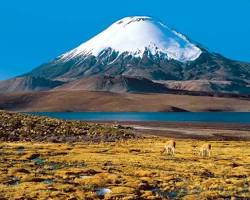
Ojos del Salado: The Highest Active Volcano on Earth

ppr-revolution.com – Ojos del Salado, a stratovolcano straddling the border of Argentina and Chile, holds the title of the highest active volcano on Earth. Rising to an impressive 6,893 meters (22,615 feet), this colossal peak is a magnet for adventurous climbers and explorers.

A Dormant Giant

Despite its volcanic nature, Ojos del Salado has not erupted in recorded history. However, its geothermal activity, including fumaroles and hot springs, indicates that it remains an active volcano. This makes it a fascinating geological feature and a valuable site for scientific research.

A Challenging Climb

While Ojos del Salado is not as technically demanding as some other high-altitude peaks, its extreme altitude and harsh climate pose significant challenges to climbers. The most common route to the summit is the Polish Glacier route, which involves ascending a series of steep slopes and glaciers.

Acclimatization is crucial for a successful summit attempt. Climbers typically spend several days at intermediate camps to adjust to the thin air and extreme cold. The final push to the summit is often done at night to avoid the intense daytime heat and strong winds.

A Unique Ecosystem

The arid environment of the Atacama Desert, where Ojos del Salado is located, limits the diversity of life on the mountain. However, some hardy species, such as vicuñas and Andean condors, can be found in the lower elevations.

A Cultural Icon

Ojos del Salado has cultural significance for the indigenous communities that inhabit the region. The Atacama Desert, where the volcano is located, is one of the driest places on Earth and has a unique cultural heritage.

Ojos del Salado is a testament to the power of nature. Its immense size, volcanic activity, and challenging terrain make it a truly awe-inspiring peak. For those who are drawn to the adventure of high-altitude climbing, Ojos del Salado offers a unique and unforgettable experience.

Captain Marvel: Earth’s Mightiest Hero

ppr-revolution.com – Captain Marvel, also known as Carol Danvers, stands as one of the most powerful heroes in the Marvel Universe. Her journey from being an Air Force pilot to becoming Earth’s mightiest hero is nothing short of extraordinary. With superhuman strength, speed, and the ability to fly, she plays a crucial role in defending the Earth and the cosmos from various threats.

Origins and Transformation

Carol Danvers first appeared in Marvel Comics in 1968, introduced as a security chief at a missile base. Her transformation into Captain Marvel was catalyzed by an explosion involving an alien device, which merged her DNA with that of the Kree warrior, Mar-Vell. This event granted her incredible powers, transforming her into the superhero known as Ms. Marvel. Over time, she adopted the mantle of Captain Marvel, a title previously held by Mar-Vell.

Powers and Abilities

Captain Marvel’s powers are vast and varied. She possesses superhuman strength, endurance, and stamina, allowing her to engage in combat with some of the most formidable foes. Her ability to fly at incredible speeds and project powerful energy blasts from her hands makes her a formidable opponent. Additionally, she has a unique power known as “Binary,” which enables her to channel the energy of a white hole, granting her near-limitless energy manipulation capabilities.

Role in the Marvel Universe

As a key member of the Avengers, Captain Marvel has played a significant role in numerous storylines and battles. Her leadership skills and tactical intelligence have made her a respected figure among her peers. She often finds herself at the forefront of intergalactic conflicts, using her powers to protect not only Earth but also the broader universe from existential threats.

Cultural Impact

Captain Marvel has become an icon of empowerment, representing strength and resilience. Her stories often explore themes of identity, self-discovery, and overcoming adversity, resonating with audiences worldwide. The 2019 film adaptation, starring Brie Larson, further solidified her status as a cultural icon, inspiring a new generation of fans.

Conclusion

Captain Marvel’s journey from a skilled pilot to one of the universe’s most powerful heroes is a testament to her strength and determination. As Earth’s mightiest hero, she continues to inspire millions with her courage and unwavering commitment to justice. Her legacy in the Marvel Universe is secure, and her adventures promise to captivate audiences for years to come.

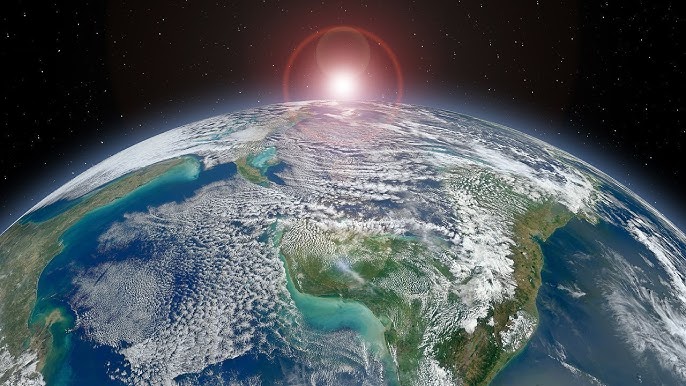
From Formation to Present Day: The History of Earth

ppr-revolution.com – The story of Earth begins approximately 4.5 billion years ago, when our planet coalesced from the solar nebula, a disk-shaped mass of dust and gas left over from the Sun’s formation. The early Earth was a hot, molten sphere, constantly bombarded by meteorites and comets. Over millions of years, the planet cooled, and a solid crust formed. The atmosphere was likely composed of gases such as carbon dioxide, nitrogen, and water vapor, which eventually led to the formation of the oceans.

The Emergence of Life

The first signs of life on Earth appeared around 3.5 to 3.8 billion years ago. These early life forms were simple, single-celled organisms that lived in the oceans. The process by which life originated from non-living matter is known as abiogenesis, and while the exact details remain a subject of research, it is believed that the early Earth’s conditions were conducive to the formation of complex organic molecules.

The Evolution of Life

Over billions of years, life on Earth evolved from simple microorganisms to the diverse array of species we see today. This process, known as evolution, is driven by natural selection, where organisms best suited to their environment are more likely to survive and reproduce. Key events in the history of life include the appearance of multicellular organisms, the colonization of land by plants and animals, the rise of dinosaurs, and the eventual emergence of mammals.

Mass Extinctions

The history of Earth is punctuated by several mass extinction events, where a significant portion of the planet’s species were wiped out. The most famous of these is the Cretaceous-Paleogene extinction event, which occurred 66 million years ago and led to the demise of the dinosaurs. These events were caused by a variety of factors, including asteroid impacts, volcanic eruptions, and climate change.

The Rise of Humans

Humans, or Homo sapiens, first appeared around 300,000 years ago. Our ancestors evolved from earlier hominins in Africa and eventually spread across the globe. The development of agriculture, the rise of civilizations, and the industrial revolution are just a few of the milestones in human history that have shaped the planet.

The Impact of Humans on Earth

Humans have had a profound impact on the Earth’s environment. From the clearing of forests for agriculture to the burning of fossil fuels and the resulting climate change, human activities have altered the planet in ways that will have lasting effects. Conservation efforts and the development of sustainable technologies are crucial for addressing these challenges.

The Present Day

Today, Earth is home to an estimated 8.7 million species, with new ones being discovered regularly. The planet continues to change, shaped by both natural processes and human activities. As we look to the future, understanding our past is essential for making informed decisions about how we interact with our environment.

Conclusion

The history of Earth is a tale of constant change and adaptation. From its fiery beginnings to the complex web of life that exists today, our planet has undergone incredible transformations. As we move forward, it is our responsibility to learn from the past and work towards a sustainable future for all life on Earth.