Flirt (1983): A Playful Exploration of Love, and Infidelity

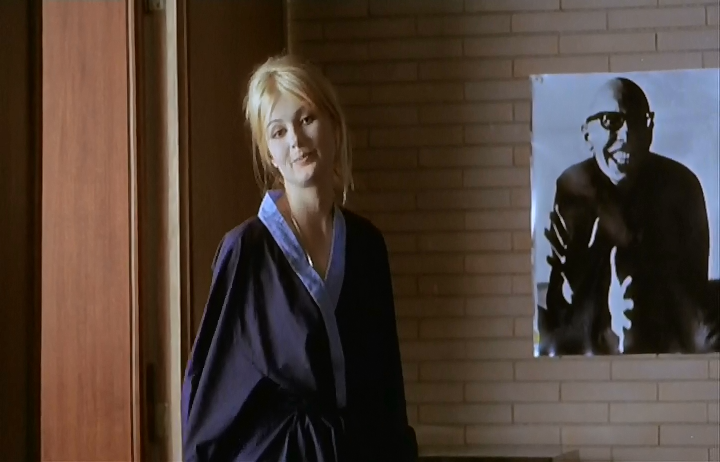
ppr-revolution.com “Flirt” (1983) is a romantic comedy directed by Nanni Loy, known for his adept handling of social commentary and humor in Italian cinema. The film, starring Giancarlo Giannini, Francesca Neri, and Jean-Louis Trintignant, delves into the intricate dynamics of modern relationships, exploring themes such as infidelity, jealousy, and the blurred lines between love and desire. Set against the backdrop of contemporary Italy, “Flirt” combines humor, emotional depth, and insightful social observations to create an engaging narrative about the complexities of romantic entanglements.

Plot Overview

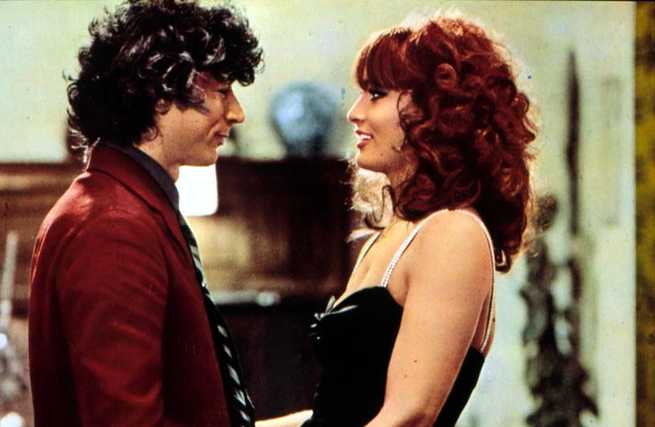
“Flirt” revolves around the life of Luca (played by Giancarlo Giannini), a seemingly content and happily married man whose stable life begins to unravel when he finds himself caught in a series of flirtations and emotional entanglements. The film opens with Luca’s initial complacency in his marriage to Carla (played by Francesca Neri), with whom he shares a comfortable but routine life. However, Luca’s world is shaken when he meets a mysterious woman named Sophie (played by Jean-Louis Trintignant), a seductive and confident character who captures his attention and throws him into a whirlwind of emotions.

Luca’s flirtation with Sophie is initially harmless but gradually evolves into an affair that challenges his relationship with Carla. As Luca’s desire for the thrill of infidelity grows, he finds himself torn between the comfort and stability of his marriage and the excitement and passion that Sophie represents. The film explores the tension between Luca’s emotional attachment to his wife and his growing attraction to Sophie, highlighting the complexities of romantic commitment and the lure of temptation.

Throughout the film, Luca’s internal struggle is mirrored by the reactions of those around him, including his best friend Marco (played by Giancarlo Giannini), who offers him advice, and Sophie, whose intentions remain unclear. The film plays with the concept of flirting as both a physical act and an emotional game, exposing the fragility of trust, the allure of forbidden love, and the consequences of infidelity.

Themes: Love, Infidelity, and the Illusions of Romance

At its heart, “Flirt” is a film about the tension between love and infidelity. The central theme revolves around the idea that romantic relationships are often fraught with emotional complexities, where desire, passion, and loyalty can clash in unexpected ways. Luca’s flirtations serve as a metaphor for the desire to escape the monotony of daily life, yet they also expose the fragility of human connection and the dangers of seeking excitement outside the confines of a committed relationship.

The film also delves into the illusion of romance. Luca’s initial attraction to Sophie seems like a moment of liberation from the restrictions of marriage, but as the affair deepens, the reality of his emotions and the consequences of his actions begin to unravel. This disillusionment is an important theme in the film, as it suggests that the pursuit of passion outside of a relationship is often not as fulfilling or meaningful as one might hope. The film uses Luca’s flirtations to explore the emotional cost of infidelity and the emptiness that often accompanies the thrill of new love.

Jealousy is another central theme explored in the film. As Luca’s affair progresses, both he and Carla experience moments of jealousy and insecurity, which further complicate their already fragile relationship. The film underscores how the introduction of a third party can destabilize trust in a marriage and ignite feelings of possessiveness and suspicion. It also touches on the games that people play in relationships, where the lines between love, desire, and manipulation often blur.

Another theme explored in “Flirt” is the modern view of commitment and how contemporary relationships are often tested by the pull of desire and the temptation to break free from established norms. The film critiques how individuals often seek to preserve their sense of personal freedom at the expense of emotional connections, raising questions about whether true commitment is achievable in a world full of distractions and fleeting attractions.

Performances: Giancarlo Giannini, Francesca Neri, and Jean-Louis Trintignant

The performances in “Flirt” are a significant strength of the film, with each actor bringing depth and nuance to their respective roles. Giancarlo Giannini, known for his ability to portray both comedic and dramatic characters with equal skill, excels as Luca, the conflicted protagonist torn between his loyalty to his wife and his attraction to Sophie. Giannini perfectly captures the inner turmoil of a man who finds himself at a crossroads, struggling to reconcile his desires with his responsibilities. His performance is both humorous and poignant, allowing the audience to empathize with his character despite his flaws.

Francesca Neri, as Carla, delivers a strong performance as Luca’s wife, a woman who is at first unaware of her husband’s infidelity but eventually confronts the emotional challenges of their relationship. Neri’s portrayal of Carla conveys a sense of quiet strength and vulnerability, making her a relatable and sympathetic character. As the film progresses, Carla’s emotional journey reflects the deep hurt caused by betrayal, and Neri’s performance captures the complexity of her character’s emotional arc.

Jean-Louis Trintignant, playing Sophie, brings a layer of mystery and allure to the film. Sophie is the catalyst for Luca’s emotional turmoil, and Trintignant plays her with a subtle, seductive charm that makes her both enigmatic and captivating. The character of Sophie remains somewhat elusive, and Trintignant’s performance adds to the sense of intrigue and uncertainty surrounding her intentions. Her presence in the film challenges Luca’s perception of love and commitment, and Trintignant masterfully portrays the ambiguity of her character.

The interactions between the three leads create a palpable tension, with each actor contributing to the film’s exploration of love, desire, and infidelity. The chemistry between Giannini, Neri, and Trintignant elevates the film, making it both emotionally resonant and thematically rich.

Direction and Cinematic Style

Nanni Loy’s direction in “Flirt” combines humor and drama to create a film that is both lighthearted and thought-provoking. Loy expertly navigates the delicate balance between the comedic elements of the film and the deeper emotional conflicts at play. His direction ensures that the film remains engaging, with moments of levity and romance mixed with a subtle critique of modern relationships.

The film’s pacing is steady, allowing the narrative to unfold at a natural rhythm as the characters’ emotions and motivations become increasingly complicated. Loy uses the interactions between the characters to explore their psychological states, often focusing on their reactions to moments of tension, jealousy, and desire.

The cinematography, by Giuseppe Ruzzolini, complements the film’s tone, using intimate close-ups to capture the characters’ internal struggles while also employing wider shots to highlight the social dynamics at play. The film’s visual style reflects the emotional and physical distance between the characters, especially as Luca’s affair becomes more complicated.

The score, composed by Franco Piersanti, adds to the film’s emotional depth, underscoring the romantic tension between the characters. The music is subtle and evocative, enhancing the film’s mood and helping to convey the shifting emotional landscape as Luca navigates the complexities of his relationships.

Reception and Legacy

“Flirt” was met with generally positive reviews upon its release, with critics praising its exploration of romantic relationships and its ability to balance humor with emotional depth. The film’s insightful treatment of infidelity, desire, and the human condition resonated with audiences, particularly in Italy, where the themes of the film mirrored the complexities of contemporary Italian society. The performances by Giancarlo Giannini, Francesca Neri, and Jean-Louis Trintignant were widely appreciated, with Giannini’s portrayal of the conflicted protagonist earning particular praise.

Over time, “Flirt” has become recognized as an important work in Nanni Loy’s career, contributing to the Italian filmmaker’s legacy as a director who could blend social commentary with humor and emotional exploration. The film’s themes of love, infidelity, and the search for personal freedom remain relevant, and its engaging performances and witty dialogue continue to make it a memorable and insightful film.

Conclusion

“Flirt” (1983) is a captivating romantic comedy that examines the complexities of love, infidelity, and human desire. Through the performances of Giancarlo Giannini, Francesca Neri, and Jean-Louis Trintignant, the film explores the emotional tensions that arise in relationships, questioning the nature of commitment and the illusions of romance. Nanni Loy’s direction combines humor with emotional depth, making “Flirt” both an entertaining and thought-provoking exploration of the fragility of love and the consequences of seeking excitement outside of a committed relationship. Its themes and performances have ensured its place as a notable film in Italian cinema.
Juliet of the Spirits (1965): A Surreal Journey into the Mind

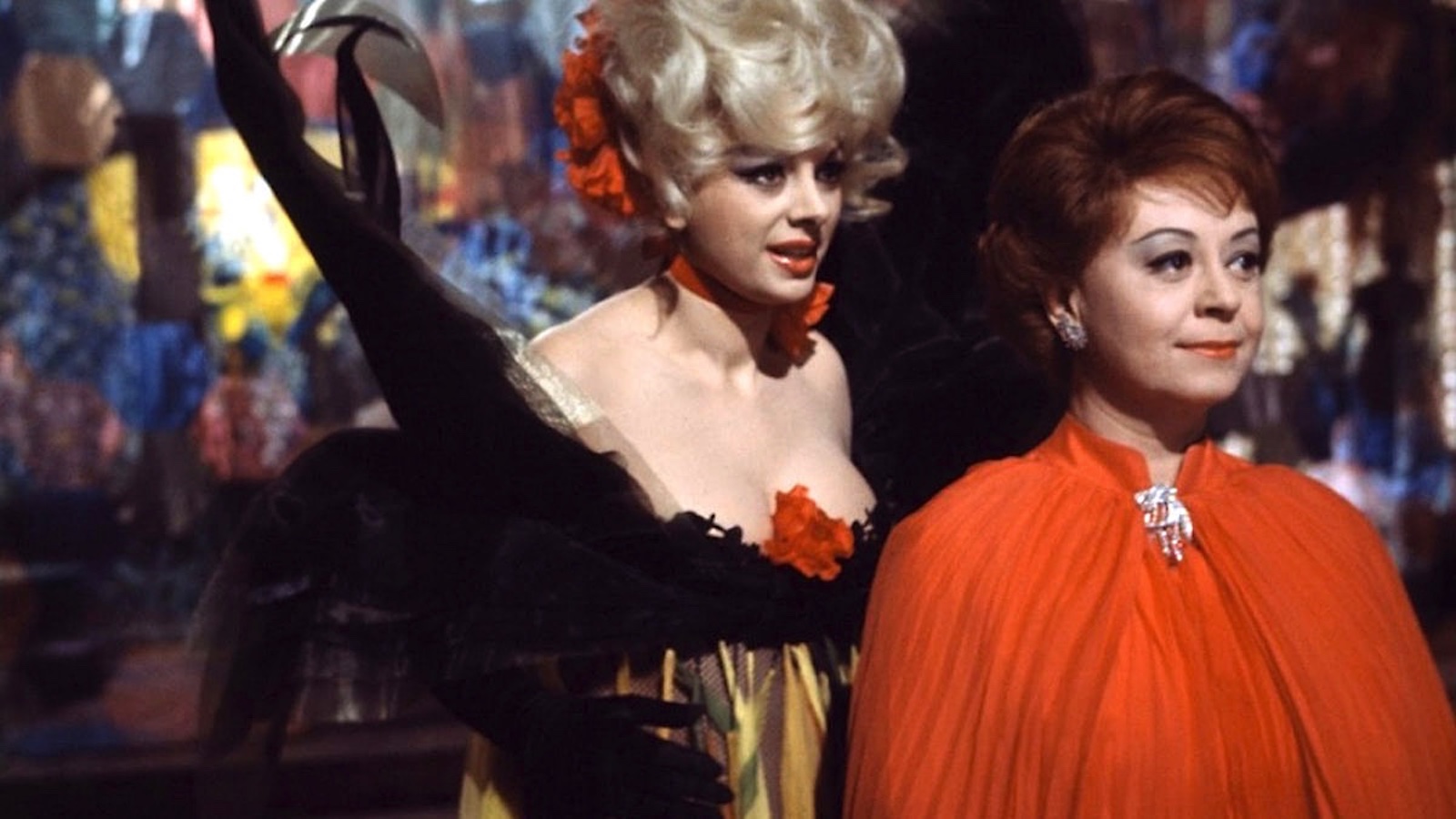
ppr-revolution.com – Federico Fellini’s Juliet of the Spirits (1965) is a surreal and dreamlike exploration of the human psyche. This cinematic masterpiece delves into the depths of a woman’s subconscious, blending fantasy and reality to create a visually stunning and emotionally resonant experience.   

A Protagonist Unbound

The film centers around Giulietta Masina, a captivating performance as the titular character, Juliet. Juliet is a woman of contradictions, both ordinary and extraordinary, who embarks on a journey of self-discovery. As she confronts her husband’s infidelity and the complexities of her own desires, she begins to unravel the mysteries of her subconscious.   

A Surrealist Tapestry

Fellini’s signature style is on full display in Juliet of the Spirits. The film is a visual feast, filled with surreal imagery, vivid colors, and striking set designs. From the ethereal dream sequences to the bizarre characters that populate Juliet’s world, every frame is a work of art.   

A Psychological Odyssey

Beyond its visual splendor, Juliet of the Spirits is a profound psychological exploration. The film delves into themes of identity, desire, and the power of the imagination. Fellini’s masterful storytelling and Masina’s captivating performance elevate the film to a truly unforgettable cinematic experience.   

A Timeless Classic

Juliet of the Spirits is a timeless classic that continues to captivate audiences with its unique blend of surrealism, fantasy, and psychological insight. It is a film that rewards repeated viewings, offering new layers of meaning and interpretation with each watch.

A Must-See for Film Lovers

If you appreciate visually stunning films with a strong emotional core, Juliet of the Spirits is a must-see. Its enduring appeal lies in its ability to transport viewers to a world of dreams, desires, and the unknown.

Shampoo: A Satirical Look at the 70s – A Sharp Social Commentary

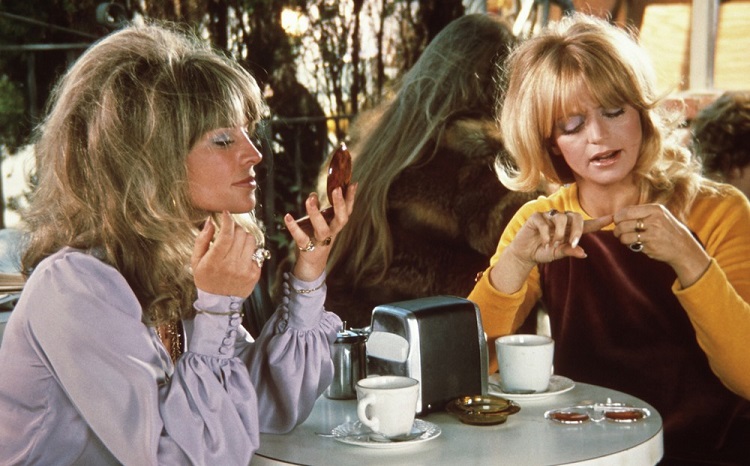
ppr-revolution.com – Hal Ashby’s 1975 film Shampoo is a satirical comedy-drama that offers a scathing look at the excesses of the 1970s. The film follows the life of George Roundy, a charismatic and promiscuous hairdresser who navigates the tumultuous world of Hollywood and high society.

A Satirical Take on the 70s

Shampoo is a satirical take on the hedonistic culture of the 1970s. The film’s characters are self-absorbed, materialistic, and morally bankrupt. They are driven by their desires for wealth, fame, and sexual gratification.

Warren Beatty’s Charismatic Performance

Warren Beatty delivers a charismatic and energetic performance as George Roundy. His portrayal of a charming and manipulative character is both hilarious and disturbing. Beatty’s performance captures the essence of the 1970s, a decade marked by excess and indulgence.

A Sharp Social Commentary

Beneath its surface of humor and sex, Shampoo is a sharp social commentary. The film critiques the superficiality of Hollywood culture, the hypocrisy of the wealthy, and the decline of traditional values.

A Timeless Tale of Desire and Deception

Despite its period setting, Shampoo remains a timeless tale of desire, deception, and the pursuit of happiness. The film’s exploration of themes such as love, sex, and power is as relevant today as it was in the 1970s.

A Cult Classic

Shampoo has become a cult classic, beloved by audiences for its witty dialogue, memorable characters, and stylish aesthetic. The film’s enduring popularity is a testament to its sharp satire and timeless appeal.

Gorilla at Large (1954): A Mischievous Primate on the Loose

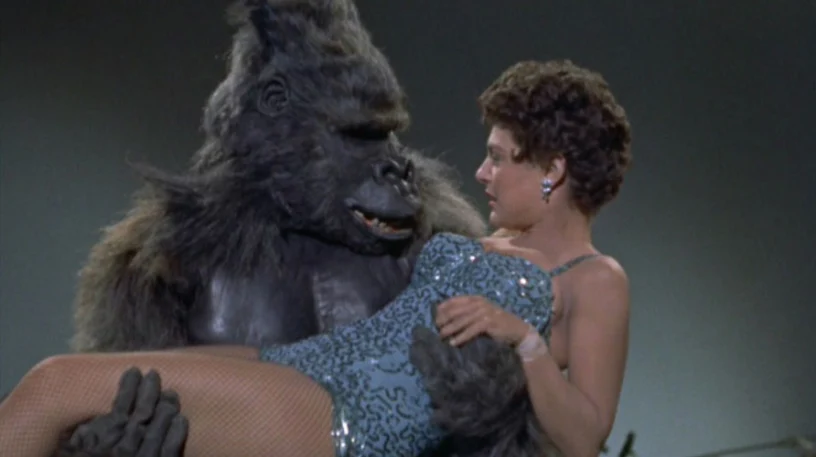
ppr-revolution.com – Gorilla at Large is a 1954 British comedy film directed by George Marshall. This lighthearted and entertaining film follows the antics of a mischievous gorilla named Jumbo who escapes from a zoo and wreaks havoc on the streets of London.

A Mischievous Menace

The film’s plot revolves around Jumbo, a clever and playful gorilla who takes advantage of his newfound freedom. As he roams the city, he encounters a variety of colorful characters, including a bumbling detective, a nervous bank clerk, and a glamorous actress.

A Blend of Comedy and Heart

While the film is primarily a comedy, it also incorporates elements of family drama and heartwarming moments. The interactions between Jumbo and the human characters are often humorous, but also highlight the bond between humans and animals.

A Classic British Comedy

Gorilla at Large is a classic British comedy that appeals to audiences of all ages. Its charming characters, witty dialogue, and slapstick humor make it a timeless film. The film’s nostalgic appeal lies in its depiction of post-war Britain, with its quaint streets and traditional values.

A Forgotten Gem

Despite its popularity upon its release, Gorilla at Large has somewhat faded into obscurity. However, it remains a delightful and entertaining film that is worth revisiting.

The Fate of the Furious: A Family Betrayed

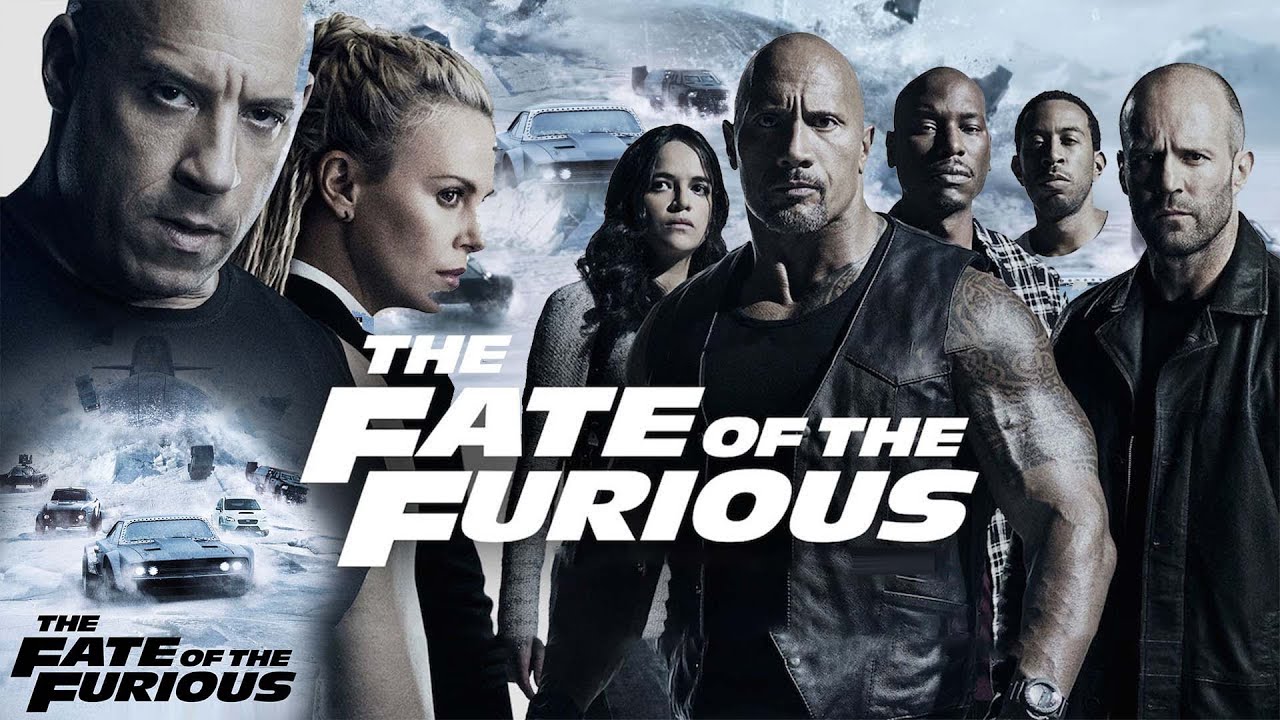
ppr-revolution.com – The Fast & Furious franchise, known for its high-octane action sequences and charismatic characters, reached new heights with The Fate of the Furious (2017). This eighth installment pushed the boundaries of the series, introducing a shocking twist that tested the loyalty of its core characters.   

A Betrayal of Epic Proportions

The film begins with Dominic Toretto (Vin Diesel), the heart and soul of the franchise, seemingly living a peaceful life with Letty Ortiz (Michelle Rodriguez). However, a mysterious cyberterrorist, Cipher (Charlize Theron), manipulates Dom, forcing him to betray his family and turn against his closest allies.   

This unexpected turn of events sets the stage for a thrilling and action-packed adventure that spans the globe, from the streets of Havana to the icy plains of Russia. The film’s high-stakes plot and jaw-dropping stunts keep audiences on the edge of their seats.

A Star-Studded Cast

The Fate of the Furious boasts an all-star cast that includes Dwayne “The Rock” Johnson, Jason Statham, Tyrese Gibson, Chris “Ludacris” Bridges, and Kurt Russell. The film also introduces Scott Eastwood as a new character, Little Nobody, who adds a fresh dynamic to the franchise.   

A Visual Spectacle

The film’s stunning visuals and breathtaking action sequences are a testament to the franchise’s commitment to pushing the boundaries of cinematic spectacle. From high-speed car chases to explosive set pieces, The Fate of the Furious delivers on every front.

A Shift in the Franchise

The Fate of the Furious marked a significant turning point for the franchise. It introduced a new villain who challenged Dom’s authority and forced the family to confront their own vulnerabilities. The film also explored themes of loyalty, betrayal, and the nature of family.   

A Legacy of Excitement

The Fast & Furious franchise has consistently defied expectations, and The Fate of the Furious is no exception. It is a thrilling and entertaining film that continues to captivate audiences worldwide. With its high-octane action, charismatic characters, and unexpected twists, it is a worthy addition to the beloved franchise.

Last Love in Tierra del Fuego (1979): A Exploration of Love

ppr-revolution.com – Last Love in Tierra del Fuego (1979) is an Argentine erotic drama film directed by Armando Bó and starring the iconic Isabel Sarli. This provocative film delves into themes of love, lust, obsession, and the complexities of human relationships. 

A Tale of Forbidden Love

Set against the stunning backdrop of Tierra del Fuego, the film follows the story of a passionate woman who becomes involved in a forbidden love affair with a younger man. Their intense connection challenges societal norms and expectations, leading to a series of passionate encounters and emotional turmoil. The film explores the power of love to both liberate and destroy, as the characters grapple with the consequences of their desires.

The Erotic Cinema of Armando Bó

Armando Bó was a prominent figure in Argentine cinema, known for his explicit and controversial films that pushed the boundaries of censorship. Last Love in Tierra del Fuego is a quintessential example of Bó’s work, featuring stunning visuals, passionate performances, and explicit love scenes. The film’s eroticism is both sensual and provocative, exploring the depths of human desire.

The Enduring Legacy of Isabel Sarli

Isabel Sarli, the leading lady of Last Love in Tierra del Fuego, is often referred to as the “Argentine sex symbol.” Her performances in Bó’s films helped to redefine the image of women in Argentine cinema, challenging traditional stereotypes and exploring the complexities of female sexuality. Sarli’s portrayal of passionate and independent women continues to inspire and captivate audiences.  

A Product of Its Time

Last Love in Tierra del Fuego is a product of its time, reflecting the social and cultural climate of the late 1970s. The film’s explicit content and provocative themes were a response to the sexual revolution and the growing openness to discussions about sexuality. However, it is important to view the film through a historical lens, recognizing the limitations of its time and the evolving understanding of gender and sexuality.

Conclusion

Last Love in Tierra del Fuego remains a controversial and divisive film, but it has undeniably left a lasting impact on cinema. It is a testament to the enduring power of love, lust, and obsession. The film continues to spark debate and controversy, prompting viewers to consider the ethical implications of explicit content and the representation of women in film. Despite its provocative nature, Last Love in Tierra del Fuego is a captivating and visually stunning film that offers a glimpse into the complexities of human desire.

Loves, Beds and Betrayals: A Farcical Comedy of Errors

ppr-revolution.com – Released in 1976, Loves, Beds and Betrayals (also known as Amori, letti e tradimenti) is an Italian comedy film directed by Alfonso Brescia. This film is a classic example of Italian comedies from the 1970s, known for their raunchy humor, over-the-top characters, and farcical plots.   

A Farcical Plot

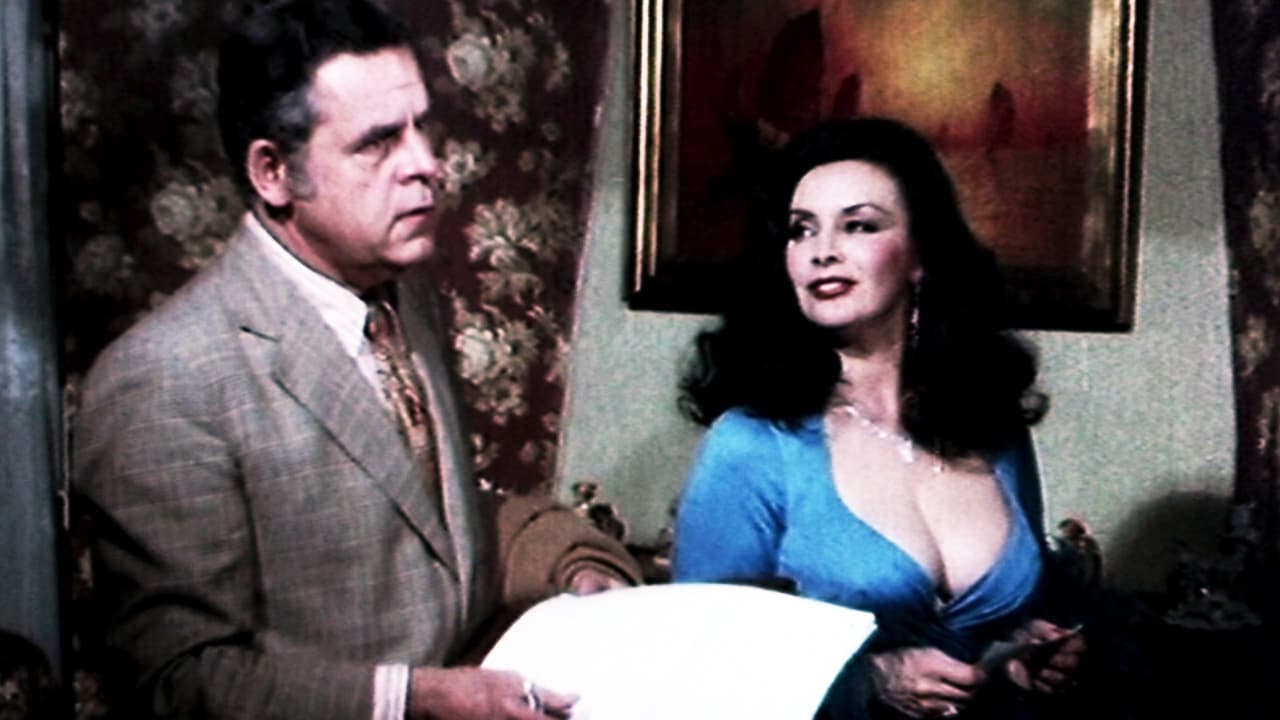
The film centers around a wealthy businessman, Commendatore Mordacchia, who attempts to acquire land from a simple shepherd, Baldo. In a series of comedic misadventures, Mordacchia’s plans are thwarted by Baldo’s cunning and the unexpected arrival of various colorful characters, including a seductive seductress and a mischievous young woman.

A Comedy of Manners

Loves, Beds and Betrayals is a comedy of manners, satirizing the upper and lower classes of Italian society. The film pokes fun at the hypocrisy, greed, and sexual obsession of the wealthy, while also celebrating the resilience and ingenuity of the working class.

A Visual Feast

The film is visually appealing, with its picturesque Italian countryside setting and lavishly decorated interiors. The costumes and hairstyles of the characters are also a visual delight, reflecting the fashion trends of the 1970s.

A Cult Classic

Although not a critically acclaimed film, Loves, Beds and Betrayals has gained a cult following over the years. Its unique blend of humor, sex, and satire has made it a popular choice for fans of Italian comedies.

A Fun and Frothy Entertainment

Loves, Beds and Betrayals is a fun and frothy entertainment that offers plenty of laughs and titillation. While the film’s humor may not appeal to all tastes, it is undeniably a product of its time and a testament to the creativity of Italian filmmakers.

A Doll’s House: A Bold and Groundbreaking Performance

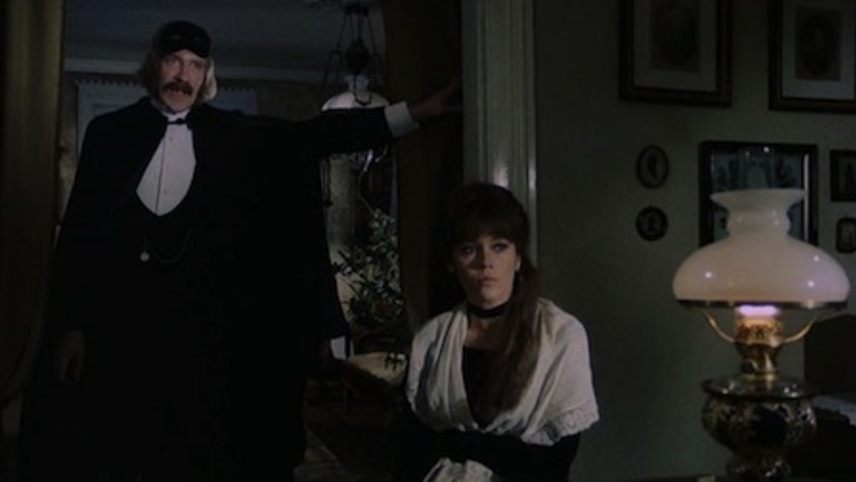
ppr-revolution.com – Jane Fonda’s portrayal of Nora Helmer in the 1973 film adaptation of Henrik Ibsen’s A Doll’s House is a landmark performance that solidified her status as a serious actress. This powerful and controversial role challenged societal norms and paved the way for a new wave of feminist cinema.

A Timeless Tale of Female Awakening

A Doll’s House is a timeless exploration of marriage, identity, and societal expectations. Nora, a seemingly submissive wife, is forced to confront the limitations of her role and the constraints imposed upon her by her husband, Torvald. Fonda’s portrayal of Nora’s gradual awakening is both subtle and powerful, as she navigates the complexities of her situation with intelligence and determination.   

A Bold Departure

Fonda’s performance in A Doll’s House was a significant departure from her previous roles. She embraced the film’s challenging themes and delivered a nuanced and emotionally charged performance. Her portrayal of Nora’s transformation from a docile housewife to a rebellious individual is both inspiring and thought-provoking.

A Controversial Film

Upon its release, A Doll’s House was a controversial film that sparked debate and discussion. Its exploration of women’s rights and the limitations of traditional gender roles challenged societal norms and provoked strong reactions. Fonda’s performance was praised for its authenticity and its ability to capture the essence of Ibsen’s groundbreaking play.  

A Lasting Legacy

A Doll’s House remains a relevant and powerful film that continues to resonate with audiences today. Fonda’s performance as Nora Helmer is a testament to her talent and her commitment to social justice. Her portrayal of a woman who dares to challenge the status quo has inspired generations of women to fight for equality and independence.   

A Must-Watch for Fonda Fans

For fans of Jane Fonda, A Doll’s House is a must-watch. It showcases her versatility as an actress and her ability to deliver powerful and emotionally charged performances. The film’s timeless themes, combined with Fonda’s iconic portrayal of Nora Helmer, make it a truly unforgettable cinematic experience.

Conclusion

A Doll’s House is a powerful and thought-provoking film that continues to resonate with audiences today. Jane Fonda’s performance as Nora Helmer is a tour-de-force, and her portrayal of a woman who defies societal expectations has had a lasting impact on popular culture. The film’s exploration of gender roles, marriage, and identity remains relevant and timely, making it a must-watch for anyone interested in the history of film and feminism.

Jet Pilot: A Cold War Romance with a Twist

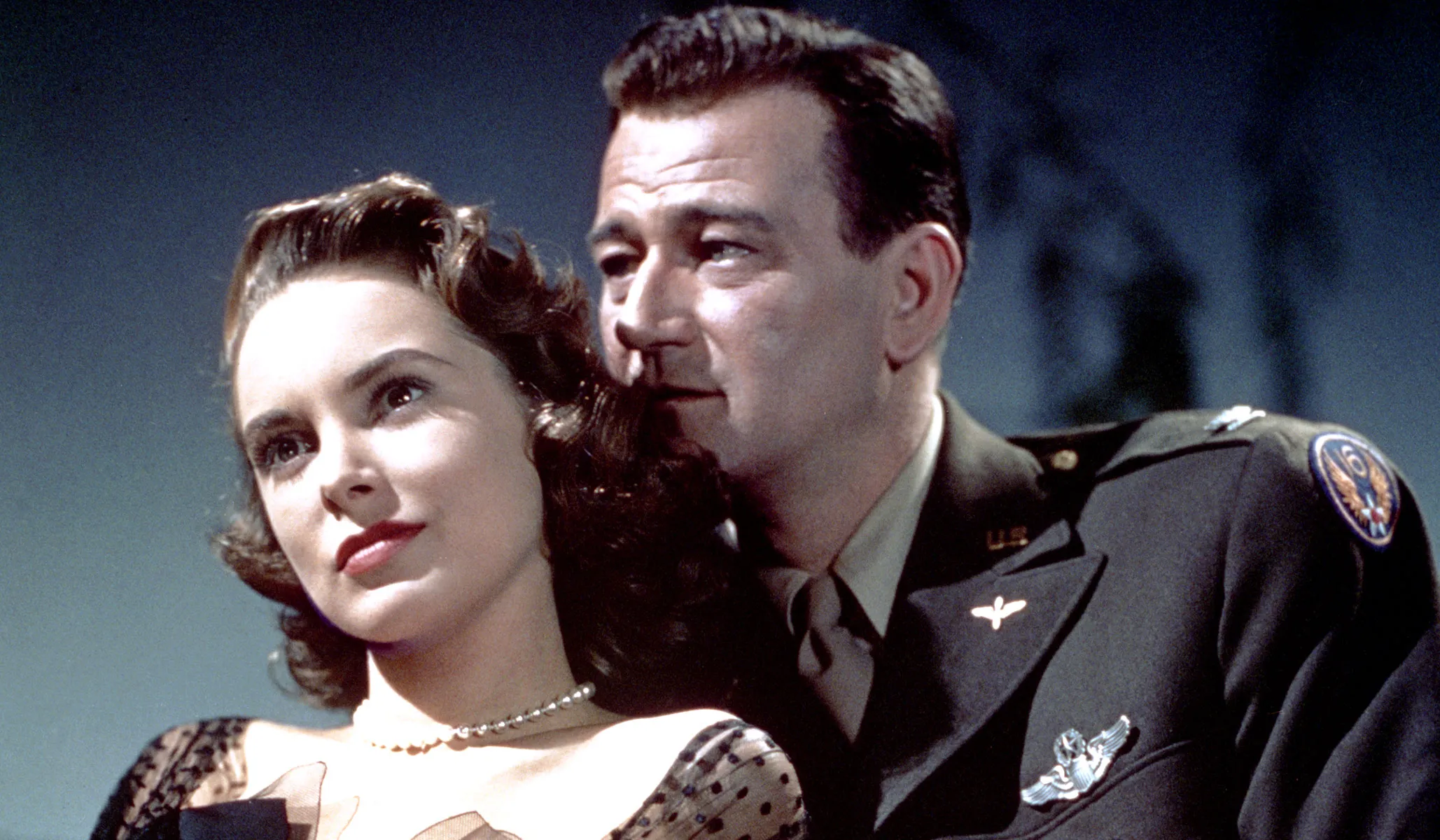
ppr-revolution.com – Jet Pilot (1957) is a unique blend of Cold War intrigue, romance, and aerial acrobatics. Directed by Josef von Sternberg and starring John Wayne and Janet Leigh, this film is a fascinating piece of cinematic history, marked by its turbulent production and distinctive style.   

A Complex Plot and Intriguing Characters

The film follows the story of Colonel Jim Shannon (John Wayne), a skilled Air Force pilot tasked with escorting a mysterious woman, Lieutenant Anna Marladovna Shannon (Janet Leigh), who claims to be a defecting Soviet pilot. As Shannon delves deeper into Anna’s enigmatic persona, he becomes entangled in a web of espionage, love, and betrayal.   

A Visual Spectacle

Jet Pilot is a visual spectacle, featuring breathtaking aerial sequences that showcase the power and beauty of jet aircraft. Von Sternberg’s signature style, characterized by dramatic lighting and stylized compositions, adds a layer of visual sophistication to the film.

A Controversial Production

The production of Jet Pilot was plagued by numerous challenges, including budget overruns, creative differences, and the eccentric behavior of producer Howard Hughes. The film’s release was delayed for several years, and when it finally hit theaters, it received mixed reviews from critics.

A Cult Classic

Despite its troubled production history and mixed reception, Jet Pilot has developed a cult following over the years. Its unique blend of action, romance, and suspense, combined with its iconic performances and stunning visuals, has captivated audiences. The film’s enduring appeal lies in its ability to transport viewers to a bygone era of Cold War intrigue and cinematic spectacle.

Jet Pilot is a fascinating piece of cinematic history that offers a glimpse into the world of 1950s Hollywood. Its complex plot, stylish visuals, and iconic performances make it a must-watch for fans of classic cinema.

The Detective: A Gritty and Realistic Police Procedural

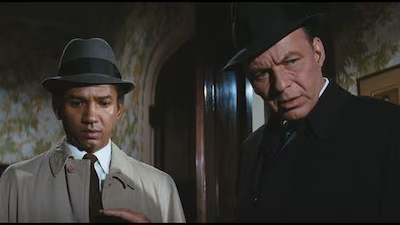
ppr-revolution.com – “The Detective” (1968) is a gritty and realistic police procedural that delves into the dark and dangerous underbelly of New York City. Directed by Gordon Douglas and starring Frank Sinatra, the film offers a stark contrast to the glamorous detective stories of the past.

A Detective on the Edge

Frank Sinatra portrays Joe Leland, a seasoned New York City detective who is haunted by his past and struggling with alcoholism. When a young woman is brutally murdered, Leland becomes obsessed with solving the case, even as his personal life spirals out of control.

A Gory and Realistic Portrayal of Crime

“The Detective” is notable for its unflinching portrayal of violence and the gritty realities of police work. The film’s graphic crime scenes and intense dialogue challenge the conventions of traditional detective films. Sinatra’s performance as a troubled and morally ambiguous detective is both compelling and disturbing.

A Socially Conscious Thriller

The film also delves into social issues such as racism, poverty, and corruption. Leland’s investigation leads him into the city’s seedy underbelly, where he encounters a diverse cast of characters, including prostitutes, drug addicts, and organized crime figures.

A Timeless Classic

Despite its dark and gritty tone, “The Detective” remains a timeless classic. Its realistic portrayal of police work, its complex characters, and its exploration of social issues continue to resonate with audiences today. The film’s enduring legacy lies in its ability to challenge the conventions of the detective genre and offer a more authentic and disturbing portrayal of crime and its consequences.

Conclusion

“The Detective” is a gritty and realistic police procedural that offers a stark and unflinching look at the darker side of human nature. Its complex characters, compelling storyline, and powerful performances make it a must-watch for fans of crime dramas. The film’s enduring legacy lies in its ability to challenge the conventions of the genre and offer a more authentic and disturbing portrayal of the criminal underworld.

Gun the Man Down: A Gritty Western Revenge Tale

ppr-revolution.com – Gun the Man Down (1956) is a classic Western film that showcases the talents of James Arness and Angie Dickinson. Directed by Andrew V. McLaglen, the film tells the story of a betrayed outlaw seeking revenge against his former partners-in-crime.

A Betrayal and a Vow for Revenge

The film opens with a bank robbery gone wrong. Rem Anderson (James Arness), a skilled gunslinger, is severely wounded during the escape. His two partners, Matt Rankin (Robert J. Wilke) and Ralph Farley (Don Megowan), abandon him to the pursuing lawmen in order to secure their share of the loot. Left for dead, Rem swears vengeance on his treacherous companions.

Angie Dickinson’s Debut Role

Angie Dickinson makes her film debut in Gun the Man Down, portraying Jan, Rem’s loyal girlfriend. Her performance is captivating, and she quickly establishes herself as a promising young actress. Dickinson’s character adds a layer of romance and complexity to the film, as she navigates a dangerous world filled with betrayal and violence.

A Gritty and Realistic Western

Gun the Man Down is a gritty and realistic Western that eschews the idealized heroes and romantic clichés of the genre. The film’s characters are flawed and morally ambiguous, reflecting the harsh realities of the American frontier. The violence is intense and unflinching, and the film’s dark tone sets it apart from other Westerns of the era.

A Timeless Classic

Despite its relatively low budget, Gun the Man Down is a timeless classic that continues to captivate audiences. Its strong performances, compelling story, and gritty realism make it a must-watch for fans of the Western genre. The film’s exploration of themes such as betrayal, revenge, and redemption remains relevant today.

The George Raft Story: A Hollywood Tale

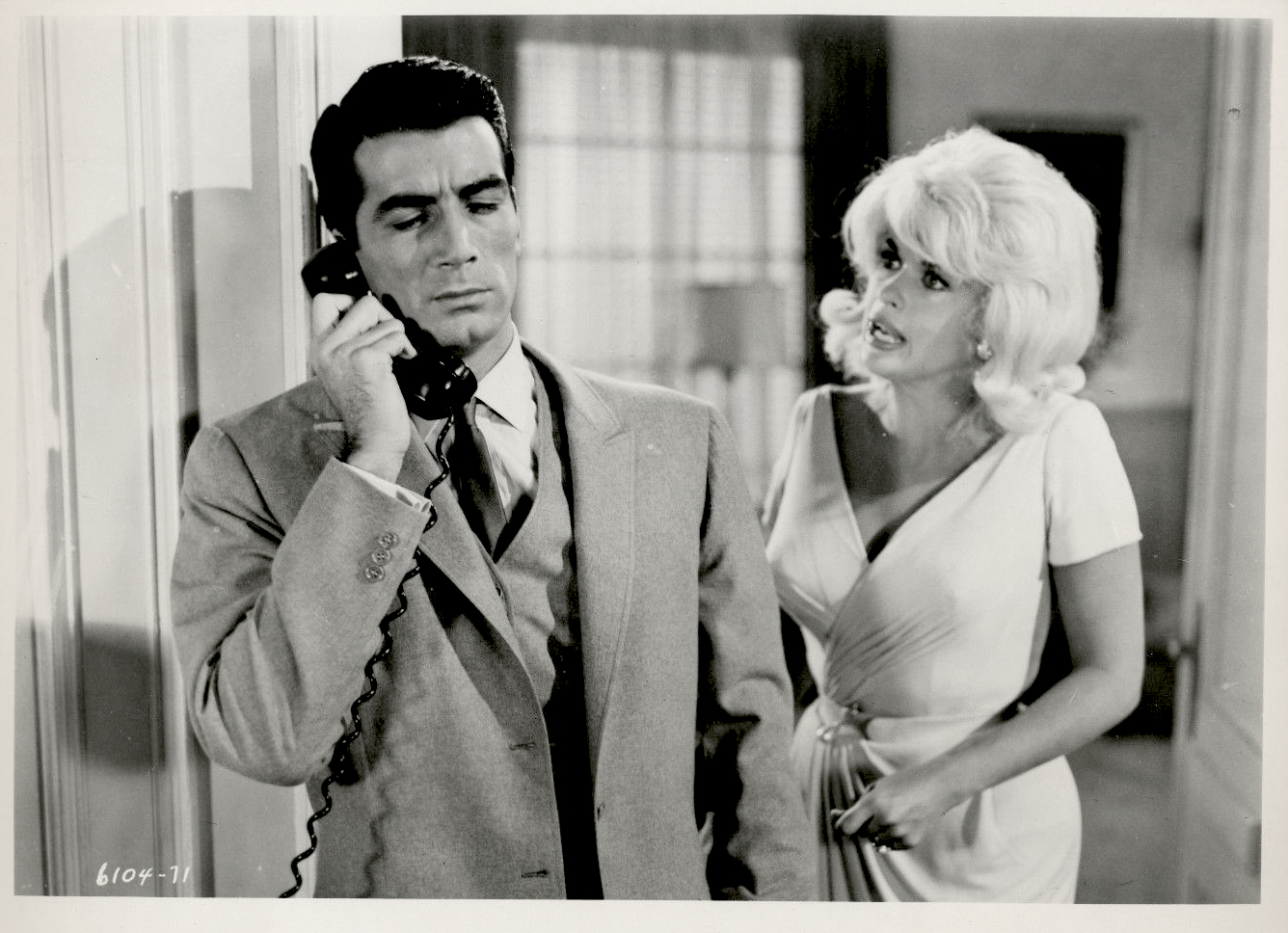
ppr-revolution.com – The George Raft Story (1961) is a biographical film that delves into the fascinating life of the iconic Hollywood actor, George Raft. Directed by Joseph M. Newman and starring Ray Danton as Raft, the film offers a glimpse into the glamorous and often dangerous world of Hollywood in the 1930s and 1940s.   

From Dance Hall to Hollywood Stardom

The film chronicles Raft’s journey from his humble beginnings as a nightclub dancer to his rise to stardom in Hollywood. Danton portrays Raft with a mix of charm, toughness, and vulnerability, capturing the essence of the real-life figure. The film highlights Raft’s early career as a gangster actor, particularly his iconic role in Howard Hawks’s Scarface (1932).   

A Glimpse into the Golden Age of Hollywood

The George Raft Story offers a nostalgic look at the Golden Age of Hollywood, with its lavish parties, glamorous stars, and scandalous affairs. The film captures the glitz and glamour of the era, while also exploring the darker side of Hollywood, including the influence of organized crime.

A Love Story with a Twist

The film also delves into Raft’s romantic relationships, particularly his tumultuous affair with actress Jayne Mansfield, who is portrayed by herself in the film. Mansfield’s presence adds a touch of glamour and scandal to the story, reflecting the real-life drama that surrounded Raft’s personal life.   

A Fascinating Look at a Hollywood Legend

The George Raft Story is a fascinating look at the life and career of a Hollywood legend. The film’s blend of drama, romance, and crime makes it an entertaining and informative watch. While it may not be a critically acclaimed masterpiece, it offers a nostalgic glimpse into a bygone era and celebrates the enduring legacy of George Raft.

Why You Should Watch The George Raft Story

  • A Glimpse into Hollywood’s Golden Age: The film offers a nostalgic look at the glamorous and scandalous world of Hollywood in the 1930s and 1940s.
  • A Fascinating Biography: The film delves into the life and career of the iconic actor George Raft.  
  • A Stellar Performance by Ray Danton: Danton captures the essence of Raft’s personality and charisma.
  • Jayne Mansfield’s Glamorous Appearance: The film features a memorable performance by Jayne Mansfield.

The Fifth Cord (1971): A Masterpiece of Giallo Cinema

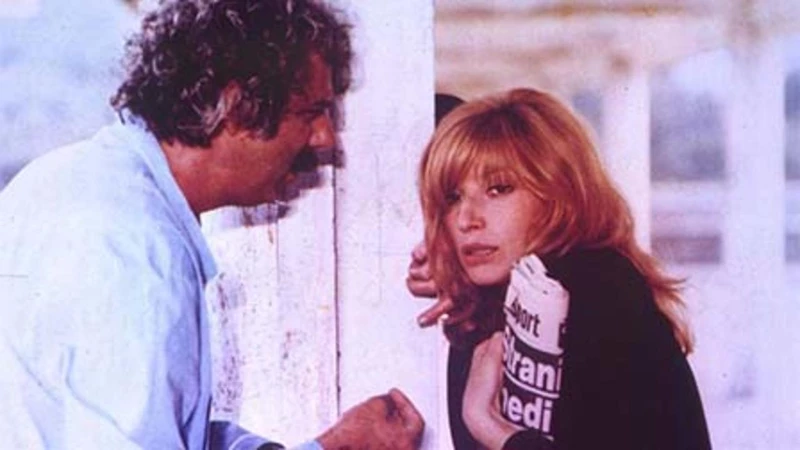
ppr-revolution.com – “The Fifth Cord” is a 1971 Italian giallo film directed by Luigi Bazzoni. Known for its visually stunning cinematography and intricate plot, the film is a standout within the giallo genre, which combines elements of mystery, thriller, and horror. This film is a must-watch for fans of Italian cinema and lovers of suspenseful storytelling.

Plot Overview

The film follows Andrea Bild, a journalist played by Franco Nero, who finds himself embroiled in a series of murders. As the bodies begin to pile up, Andrea becomes both a suspect and an investigator, determined to uncover the truth behind the killings. The narrative unfolds with a sense of suspense and tension, leading to a gripping climax that keeps audiences on the edge of their seats.

Cast and Characters

“The Fifth Cord” features a notable cast, including Franco Nero as Andrea Bild, Silvia Monti as Helene Volta, and Pamela Tiffin as Lù Auer. The performances are compelling, with Franco Nero delivering a standout portrayal of a world-weary journalist caught in a web of intrigue and danger. The supporting cast adds depth to the film, enhancing its mysterious and unsettling atmosphere.

Cinematography and Music

One of the film’s most remarkable aspects is its cinematography by Vittorio Storaro, who later became an Oscar-winning director of photography. The use of light and shadow, along with striking visual compositions, elevates the film’s aesthetic, creating an immersive and haunting experience. The music, composed by Ennio Morricone, complements the visuals with an eerie and atmospheric score that heightens the film’s tension and mood.

Themes and Reception

“The Fifth Cord” explores themes of isolation, paranoia, and the nature of evil. It delves into the psychological complexities of its characters, presenting a narrative that is as cerebral as it is thrilling. Upon its release, the film was praised for its artistic direction and gripping storyline, securing its place as a classic within the giallo genre.

Conclusion

“The Fifth Cord” (1971) is a masterful example of giallo cinema, combining stunning visuals, a captivating plot, and memorable performances. Its artistic approach and engaging mystery make it a timeless film that continues to intrigue and fascinate audiences. For those interested in exploring the depths of Italian thriller films, “The Fifth Cord” is an essential viewing experience.

Johnny Cool (1963) – A Classic Crime Drama

ppr-revolution.com – “Johnny Cool,” released in 1963, is a gripping crime drama that delves into the world of organized crime and revenge. Directed by William Asher and based on the novel “The Kingdom of Johnny Cool” by John McPartland, this film stands out as an intriguing representation of 1960s cinema. It combines elements of drama, action, and suspense, offering audiences a compelling narrative that explores themes of loyalty, betrayal, and the quest for power.

Plot Overview

The film follows the story of Johnny Colini, a Sicilian outlaw who is brought to America under the new identity of Johnny Cool. Sent by a powerful exiled crime boss, Johnny is tasked with a mission of retribution against those who betrayed his mentor. As he navigates through the intricate web of the American underworld, Johnny Cool becomes a formidable force, feared by his enemies and respected by his allies.

Characters and Performances

Henry Silva stars as the titular character, Johnny Cool, delivering a performance that encapsulates the character’s cold and calculating nature. Elizabeth Montgomery co-stars as Darien ‘Dare’ Guinness, a socialite who becomes embroiled in Johnny’s dangerous world. The film also features a strong supporting cast, including Telly Savalas, Mort Sahl, and Sammy Davis Jr., each contributing to the film’s dynamic portrayal of crime and intrigue.

Themes and Style

“Johnny Cool” is characterized by its exploration of themes such as revenge, power, and identity. The film presents a gritty and realistic portrayal of the criminal underworld, with stylistic elements that reflect the noir influences of its time. The cinematography captures the tension and suspense inherent in Johnny’s mission, while the sharp dialogue and intense action sequences keep viewers engaged.

Cultural Impact and Legacy

Though not as widely known today, “Johnny Cool” made a significant impact upon its release. It was noted for its bold storytelling and the strong performances of its cast. The film’s depiction of a morally complex protagonist who operates in a world of blurred ethical lines resonated with audiences and contributed to the era’s evolving cinematic landscape.

Conclusion

“Johnny Cool” remains a noteworthy entry in the genre of crime dramas from the 1960s. Its compelling narrative, strong performances, and thematic depth make it a film worth revisiting. For those interested in classic cinema and crime stories, “Johnny Cool” offers a captivating glimpse into a world driven by vengeance and power.

La Dolce Vita (1960): Rome’s Glamour and Despair

ppr-revolution.com – Federico Fellini’s “La Dolce Vita” is an iconic film that captures the essence of Rome during the 1960s. Released in 1960, the movie presents a vivid portrayal of the city’s vibrant nightlife and the complex life of a journalist named Marcello Rubini. With its rich narrative and stunning visuals, “La Dolce Vita” stands as a masterpiece that explores themes of love, morality, and the search for meaning in an ephemeral world.

Plot Overview

The film follows Marcello Rubini, played by Marcello Mastroianni, a journalist who immerses himself in the hedonistic lifestyle of Rome’s elite society. As he navigates through parties, romantic encounters, and professional dilemmas, Marcello becomes increasingly disillusioned with the superficiality that surrounds him. “La Dolce Vita” is structured as a series of loosely connected episodes, each revealing a different facet of Marcello’s life and the people he encounters.

Themes and Symbolism

“La Dolce Vita” delves into several themes, including the pursuit of pleasure, the search for authenticity, and the moral decay of society. The film’s title, which translates to “The Sweet Life,” is both ironic and reflective, highlighting the contrast between the glamourous facade of Rome’s nightlife and the emptiness that lies beneath. Fellini uses Rome itself as a character, with its architecture and landmarks serving as a backdrop for Marcello’s existential journey.

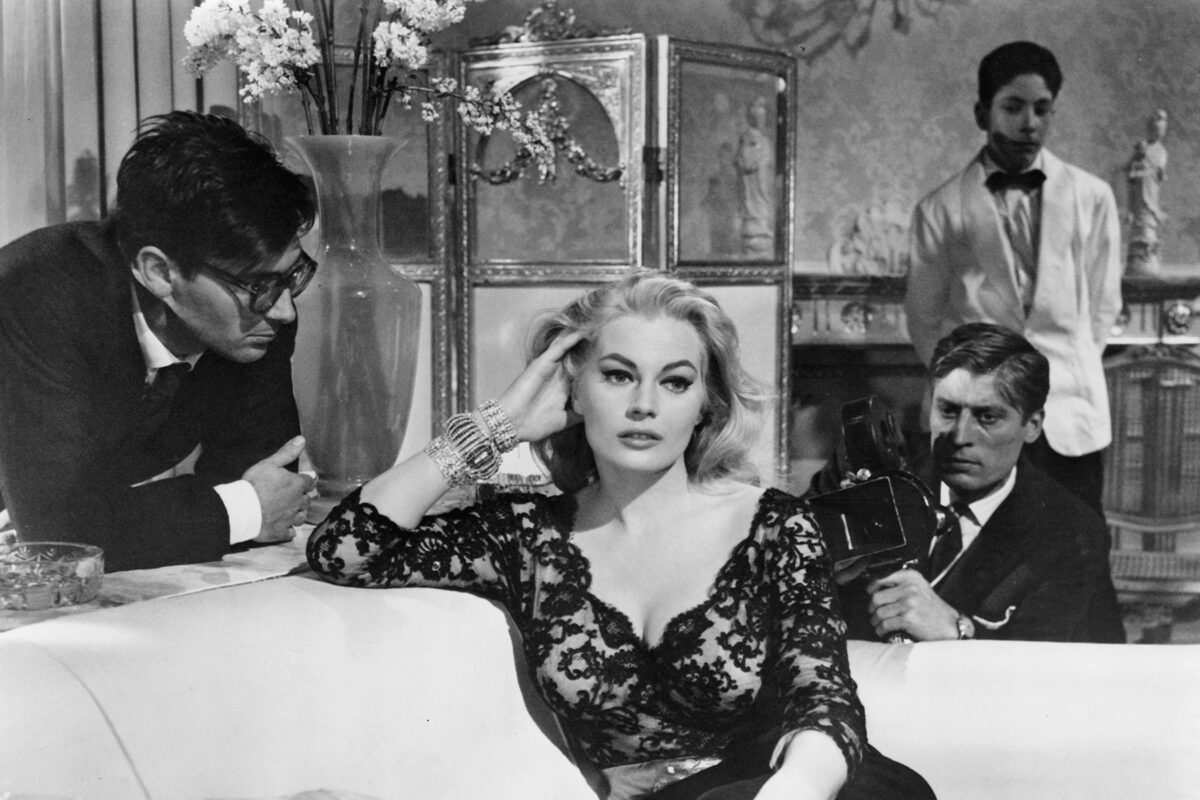
One of the most iconic scenes in the film is the Trevi Fountain sequence, where Anita Ekberg’s character, Sylvia, wades into the water, symbolizing both allure and unattainability. The scene encapsulates the film’s exploration of desire and the fleeting nature of happiness.

Cinematic Style

Fellini’s direction in “La Dolce Vita” is characterized by its striking black-and-white cinematography, innovative camera work, and a blend of realism with surrealism. The film’s episodic structure and dynamic visual storytelling create a dreamlike atmosphere that enhances the narrative’s exploration of life’s contradictions.

The use of music, composed by Nino Rota, complements the film’s mood, ranging from playful to melancholic, and underscores the emotional depth of the story.

Cultural Impact and Legacy

Upon its release, “La Dolce Vita” was both controversial and critically acclaimed, sparking debates about its portrayal of modern society. It won the Palme d’Or at the 1960 Cannes Film Festival and remains influential in cinema and popular culture. The film introduced the term “paparazzi” to the world, named after the character Paparazzo, a photographer who follows Marcello throughout the film.

“La Dolce Vita” continues to be studied for its artistic and cultural significance, offering insights into the human condition and the complexities of modern life. Its exploration of existential themes and its visual grandeur have cemented its status as a timeless classic.

Conclusion

Federico Fellini’s “La Dolce Vita” is more than just a film; it is a profound meditation on the search for meaning amidst the chaos of contemporary life. Through the lens of Marcello Rubini’s experiences, Fellini crafts a narrative that resonates with audiences, inviting them to reflect on their own lives and the world around them. As a landmark in film history, “La Dolce Vita” remains a testament to the power of cinema to explore and illuminate the human soul.

Grumpier Old Men (1995): A Delightful Sequel of Laughter & Love

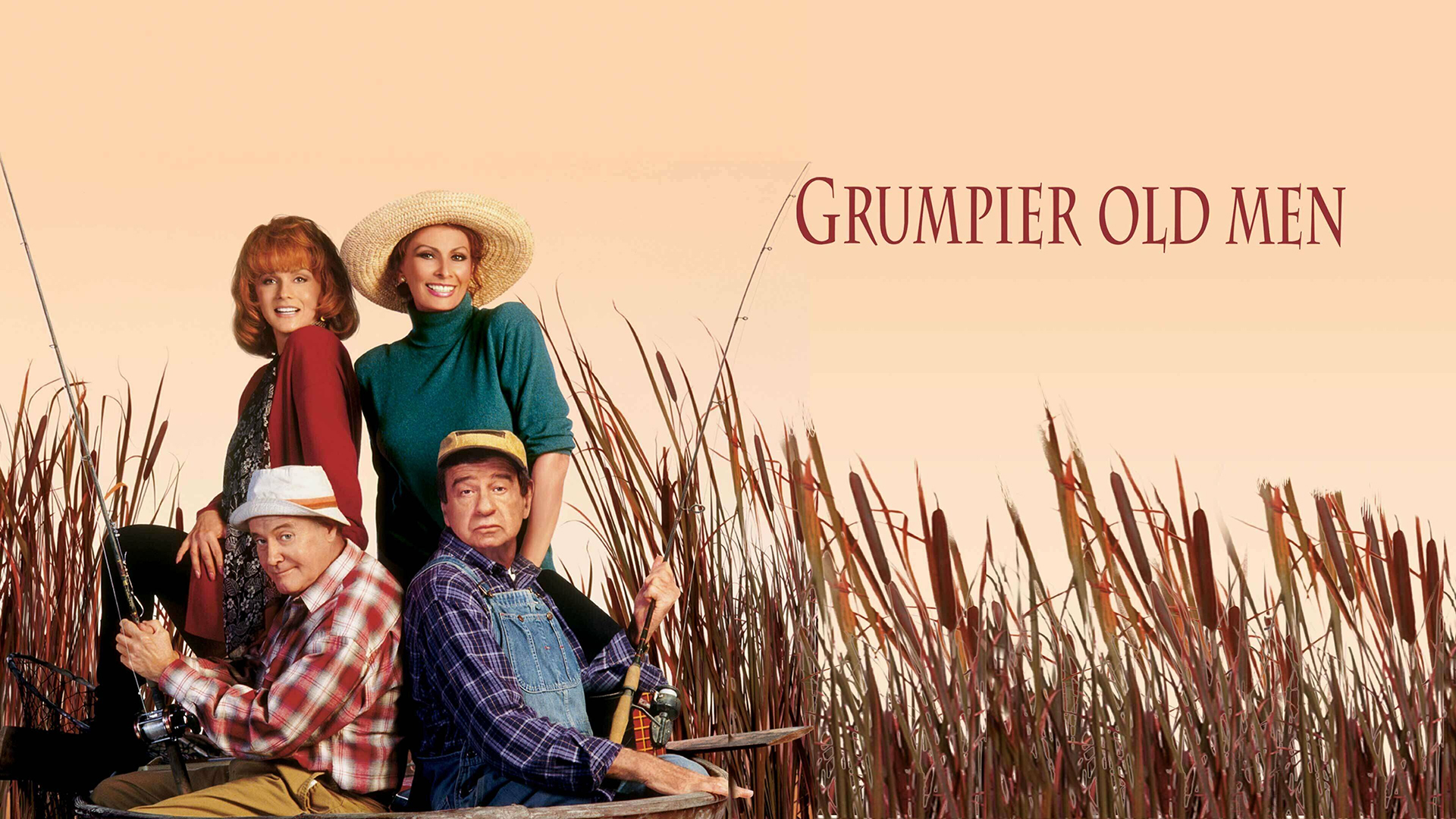
ppr-revolution.com – “Grumpier Old Men,” the 1995 sequel to the hit comedy “Grumpy Old Men,” reunites audiences with the charmingly cantankerous duo of John Gustafson and Max Goldman, played by the legendary Jack Lemmon and Walter Matthau. Directed by Howard Deutch, the film continues to explore the comedic yet heartwarming dynamics of friendship, rivalry, and romance in a small Minnesota town.

Plot Overview

The film picks up where its predecessor left off, with John and Max still living as feuding neighbors. Their rivalry is reignited with the arrival of a new character, Maria Ragetti (Sophia Loren), who plans to turn the town’s cherished bait shop into an Italian restaurant. As John and Max struggle to come to terms with this change, romantic entanglements and comedic misunderstandings ensue.

The storyline also delves into the personal lives of the characters, focusing on the relationships between John’s father, Grandpa Gustafson (Burgess Meredith), and Max’s son, Jacob (Kevin Pollak), with Melanie (Daryl Hannah), John’s daughter, adding layers of family dynamics and emotional depth.

Themes and Analysis

“Grumpier Old Men” explores themes of friendship, love, and the acceptance of change. The film humorously illustrates how aging does not diminish one’s capacity for romance or adventure. It also underscores the idea that true friendship can withstand and even thrive on rivalry, as seen in the enduring bond between John and Max.

The film highlights the complexities of family relationships and the importance of community, emphasizing how shared experiences and mutual support can create lasting connections. Through its comedic lens, “Grumpier Old Men” also offers a poignant reflection on growing old gracefully.

Performances and Direction

Jack Lemmon and Walter Matthau deliver stellar performances, their chemistry as a comedic duo remaining as sharp as ever. Sophia Loren adds a touch of elegance and charm, bringing a new dynamic to the film with her role as Maria. The supporting cast, including Ann-Margret, Kevin Pollak, and Burgess Meredith, contribute to the film’s humor and heart.

Director Howard Deutch successfully captures the essence of the original film while introducing fresh elements to keep the sequel engaging. The screenplay by Mark Steven Johnson provides witty dialogue and humorous situations that showcase the talents of the ensemble cast.

Cultural Impact

Although “Grumpier Old Men” did not achieve the same level of critical acclaim as its predecessor, it was well-received by audiences who appreciated the return of beloved characters and the continuation of their story. The film’s success solidified the enduring appeal of Lemmon and Matthau as one of cinema’s most iconic comedic pairings.

Conclusion

“Grumpier Old Men” is a delightful sequel that captures the humor and heart of its predecessor while introducing new elements of romance and rivalry. Its comedic exploration of friendship, love, and aging continues to resonate with audiences, making it a cherished addition to the legacy of Jack Lemmon and Walter Matthau.

The Shocking Miss Pilgrim (1947): A Delightful Musical Comedy

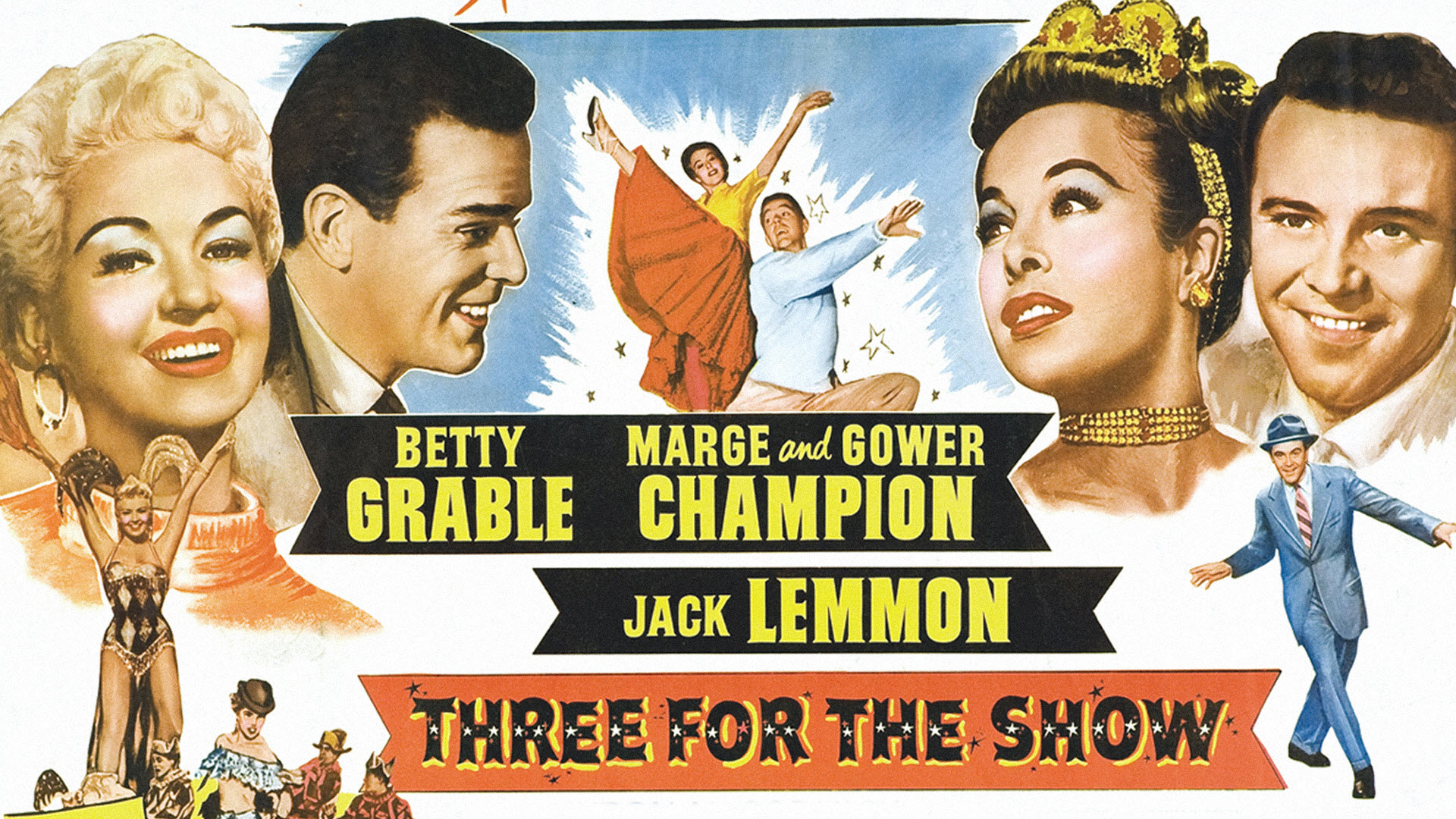
ppr-revolution.com – In the realm of classic Hollywood cinema, “The Shocking Miss Pilgrim” stands out as a fascinating blend of humor, romance, and social commentary. Released in 1947, this musical comedy was crafted by the talented director George Seaton and featured the iconic Betty Grable alongside Dick Haymes. Set against the backdrop of the late 19th century, the film weaves a narrative that is both entertaining and thought-provoking.

Plot and Characters

The story centers around Cynthia Pilgrim, played by Betty Grable, a spirited and ambitious young woman who graduates from the prestigious Packard Business College. As a top student, she secures a job as a typist—an uncommon profession for women at the time—at a Boston shipping office. Her presence in the workplace challenges the traditional gender roles and stirs up a mix of resistance and admiration from her male colleagues.

Cynthia’s determination and charm eventually win over her initially skeptical coworkers, particularly John Pritchard, portrayed by Dick Haymes. The romantic tension between Cynthia and John forms a core aspect of the narrative, adding a layer of emotional depth to the comedic plot.

Themes and Impact

“The Shocking Miss Pilgrim” is notable for its progressive themes, particularly its exploration of women’s rights and gender equality. At a time when such topics were not commonly addressed in mainstream cinema, the film subtly advocated for the empowerment of women in the workforce. Cynthia’s character embodies the spirit of independence and self-reliance, making her an inspiring figure for audiences of that era.

The film also showcases a delightful array of musical numbers, with compositions that highlight the talents of Betty Grable and Dick Haymes. The melodies and choreography add a vibrant energy to the story, making it a quintessential musical of its time.

Reception and Legacy

Upon its release, “The Shocking Miss Pilgrim” received mixed reviews from critics. While some praised its charming performances and musical sequences, others felt the film could have delved deeper into its social themes. Nevertheless, it has endured as a beloved classic, appreciated for its light-hearted approach to serious issues and its portrayal of a strong female protagonist.

Today, “The Shocking Miss Pilgrim” is remembered as a delightful example of post-war American cinema. It reflects the changing attitudes of the time and remains a testament to the enduring appeal of musical comedies.

Bad Genius (2017): A Thrilling Tale of Academic Deception

ppr-revolution.com – “Bad Genius,” a 2017 Thai film directed by Nattawut Poonpiriya, has made waves both domestically and internationally, captivating audiences with its unique blend of drama and thriller elements. The film explores themes of academic integrity, friendship, and the pressures of modern education, all while delivering an edge-of-your-seat experience that feels both fresh and exhilarating.

Plot Summary

The story centers around Lynn, a brilliant high school student who devises a sophisticated exam-cheating scheme to help her wealthy classmates score high on standardized tests. What starts as a simple favor for a friend quickly escalates into a high-stakes operation as Lynn and her accomplices strive to pull off their most ambitious plan yet: cheating on the international STIC (Standard Test for International Colleges) exam. As the stakes rise, so do the risks, and the film meticulously builds tension as it explores the moral and ethical dilemmas faced by its young protagonists.

Themes and Analysis

At its core, “Bad Genius” is a commentary on the inequities of the educational system, illustrating how socioeconomic status can affect access to opportunities. The film cleverly juxtaposes the moral ambiguity of cheating against the pressures students face to succeed academically. It raises important questions about the value placed on test scores, the lengths some are willing to go to achieve success, and the consequences of those actions.

Direction and Cinematography

Nattawut Poonpiriya’s direction is sharp and precise, turning the mundane act of taking a test into a suspenseful and thrilling experience. The film’s cinematography enhances this effect, using tight shots and quick cuts to build tension and keep viewers on the edge of their seats. The visual style is both sleek and engaging, complementing the film’s fast-paced narrative.

Performances

The cast delivers stellar performances, with Chutimon Chuengcharoensukying shining in her role as Lynn. Her portrayal of a conflicted genius is nuanced and compelling, capturing both her character’s intelligence and her internal struggle. The supporting cast also excels, particularly Eisaya Hosuwan and Teeradon Supapunpinyo, who play pivotal roles in the unfolding drama.

Conclusion

“Bad Genius” is a masterfully crafted film that combines a gripping narrative with thought-provoking themes. It challenges viewers to consider the implications of academic pressure and the moral complexities of cheating, all while delivering a thoroughly entertaining cinematic experience. The film’s success lies in its ability to resonate with audiences worldwide, transcending cultural barriers with its universal themes and thrilling storyline. Whether you’re a fan of thrillers or simply looking for a film that offers more than meets the eye, “Bad Genius” is a must-watch.

House of Flying Daggers: Romance and Martial Arts

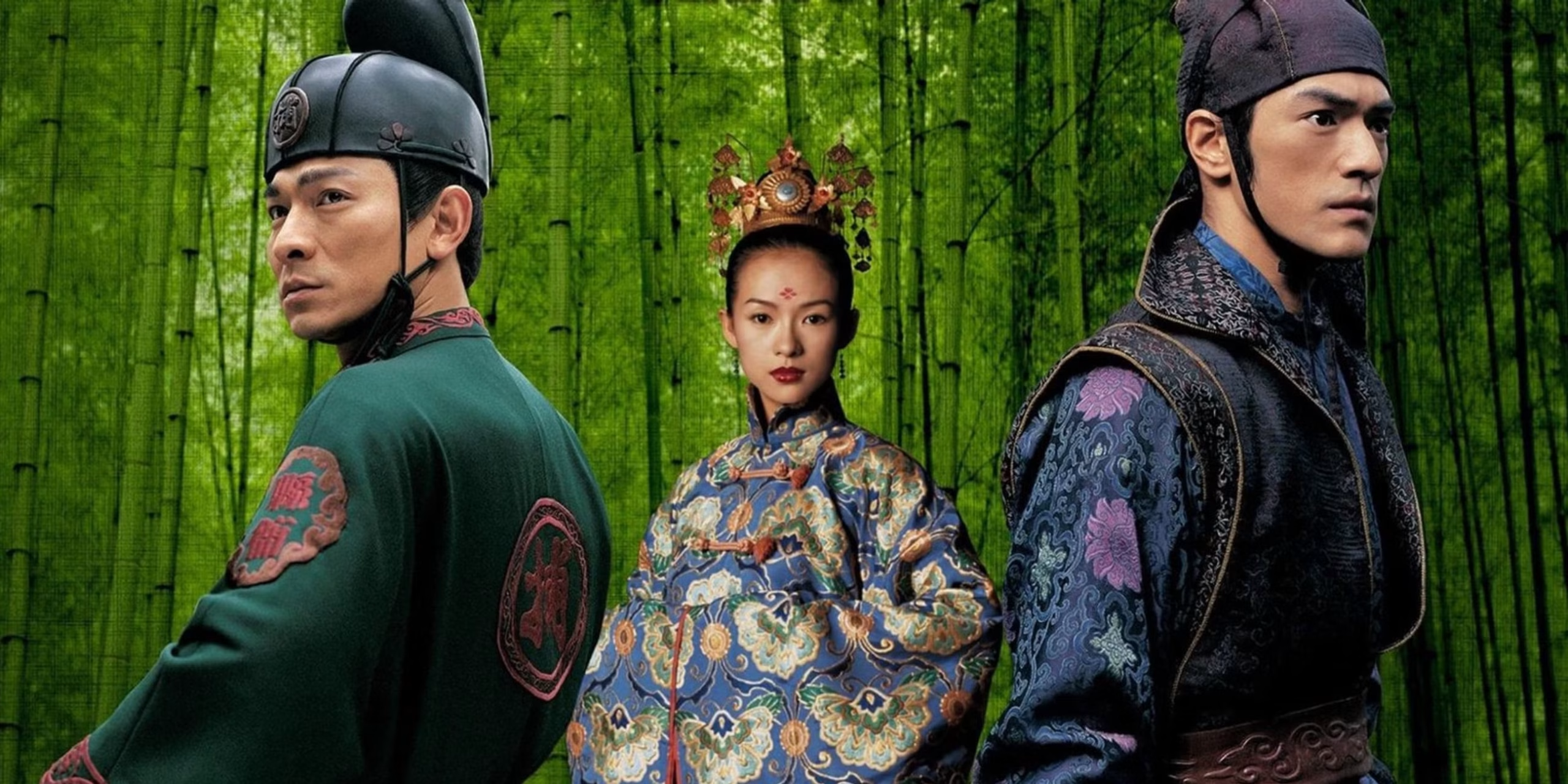
ppr-revolution.com – “House of Flying Daggers,” directed by Zhang Yimou, is a cinematic masterpiece that gracefully blends romance, action, and artistry. Released in 2004, this film is celebrated for its lush visuals and compelling narrative, capturing the essence of love and betrayal amidst the backdrop of ancient China. The film’s aesthetic elegance and intricate storytelling have left a lasting impression on audiences worldwide.

Introduction: A New Chapter in Wuxia Cinema

Following the success of “Hero” (2002), Zhang Yimou continued to explore the wuxia genre with “House of Flying Daggers.” Set during the Tang Dynasty, the film offers a mesmerizing narrative that intertwines themes of loyalty, deception, and forbidden love. With its focus on personal relationships and emotional depth, the film presents a unique take on the traditional martial arts epic, captivating viewers with its poetic imagery and intense drama.

Plot Summary: A Dance of Deception and Desire

The story of “House of Flying Daggers” revolves around the mysterious and elusive rebel group known as the House of Flying Daggers. In a bid to infiltrate and dismantle this organization, two government officers, Jin (Takeshi Kaneshiro) and Leo (Andy Lau), devise a plan involving the beautiful blind dancer Mei (Zhang Ziyi). As the narrative unfolds, a complex web of romance and intrigue emerges, leading to unexpected alliances and heart-wrenching betrayals. The film’s plot is marked by its twists and turns, keeping audiences engaged with its suspenseful and emotionally charged storyline.

Themes: Love and Loyalty in the Face of Adversity

At its core, “House of Flying Daggers” explores the themes of love and loyalty, challenging the characters’ allegiances and desires. The film delves into the complexities of human emotions, portraying how love can both unite and divide. Mei’s relationships with Jin and Leo are fraught with tension and passion, highlighting the sacrifices and conflicts that arise from their intertwined destinies. These themes are underscored by the film’s exquisite choreography and cinematography, which emphasize the delicate balance between beauty and danger.

Cinematic Excellence: A Feast for the Senses

Zhang Yimou’s direction, combined with Zhao Xiaoding’s stunning cinematography, creates a visual spectacle that is both vibrant and haunting. The film’s use of color and natural landscapes enhances the storytelling, transforming each scene into a work of art. The meticulously choreographed fight sequences, coupled with Shigeru Umebayashi’s evocative score, create an immersive experience that draws viewers into the film’s enchanting world. The dance and martial arts scenes are particularly noteworthy, showcasing the grace and precision that define the film’s aesthetic.

Legacy and Impact: A Global Appreciation for Chinese Cinema

“House of Flying Daggers” received critical acclaim and solidified Zhang Yimou’s reputation as a master filmmaker. The film was praised for its artistic vision and emotional depth, earning several award nominations and accolades. Its success contributed to a growing international appreciation for Chinese cinema, highlighting the universal appeal of stories that blend action, romance, and cultural heritage. The film’s influence can be seen in subsequent wuxia productions, inspiring filmmakers to explore new ways of storytelling within the genre.

Conclusion: An Enduring Masterpiece

“House of Flying Daggers” remains an enduring masterpiece, celebrated for its artistic brilliance and captivating narrative. Zhang Yimou’s visionary approach, combined with stellar performances by the cast, continues to resonate with audiences around the world. As a quintessential example of the wuxia genre, the film stands as a testament to the power of visual storytelling and the timeless allure of romance and martial arts.

The Godfather: A Cinematic Masterpiece

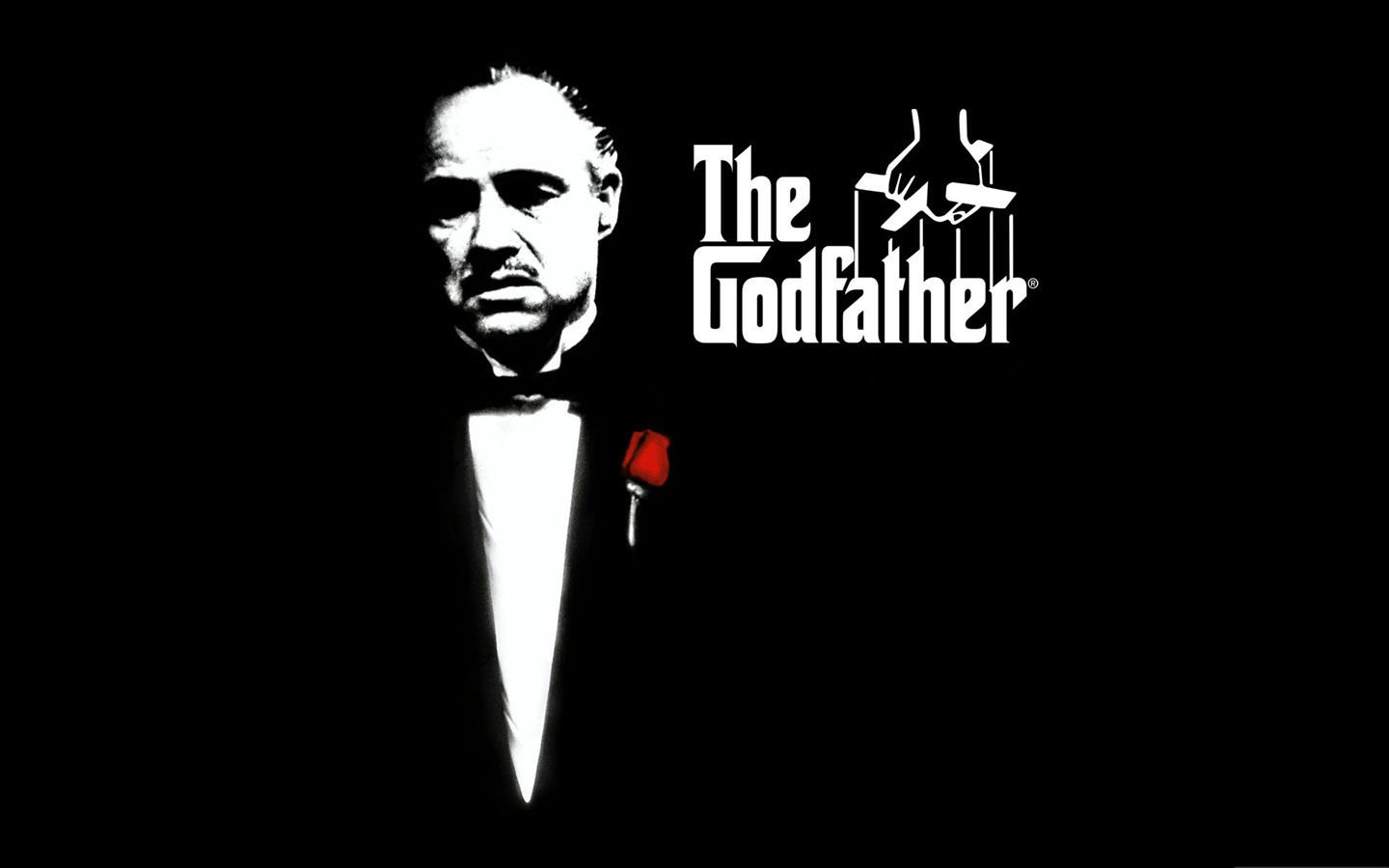
ppr-revolution.com – “The Godfather,” directed by Francis Ford Coppola and released in 1972, is widely regarded as one of the greatest films in cinematic history. Adapted from Mario Puzo’s best-selling novel of the same name, the film offers a profound exploration of the American Mafia’s inner workings and the complex dynamics of power, loyalty, and family.

Plot Overview

Set in post-World War II America, “The Godfather” follows the powerful and influential crime family of Don Vito Corleone, played masterfully by Marlon Brando. As the head of the Corleone family, Vito navigates the treacherous world of organized crime while maintaining a facade of respectability. The story intensifies when Vito’s youngest son, Michael Corleone (Al Pacino), reluctantly becomes involved in the family business, ultimately transforming from a reluctant outsider to a ruthless leader.

Themes and Symbolism

“The Godfather” delves deep into themes of loyalty, power, and the American Dream. The film portrays the Mafia as a parallel society with its own rules and codes of honor. It explores the moral ambiguity of its characters, who are caught in a world where betrayal and violence are commonplace. The film’s iconic imagery, such as the opening wedding scene and the infamous horse head scene, serves as powerful symbols of the film’s underlying themes.

Cinematic Techniques

Francis Ford Coppola’s direction and Gordon Willis’s cinematography are integral to the film’s success. The use of lighting and shadow creates a moody, atmospheric tone that underscores the film’s dark themes. Nino Rota’s haunting musical score enhances the emotional depth of the story, making it an unforgettable experience for viewers.

Cultural Impact and Legacy

“The Godfather” has left an indelible mark on popular culture and the film industry. It won three Academy Awards, including Best Picture, and has influenced countless films and television series. Its memorable quotes, such as “I’m gonna make him an offer he can’t refuse,” have become part of the cultural lexicon. The film’s portrayal of family dynamics and power struggles continues to resonate with audiences, cementing its status as a timeless classic.

Conclusion

“The Godfather” is more than just a crime drama; it is a profound exploration of human nature and the complexities of power and loyalty. Its masterful storytelling, compelling performances, and artistic brilliance have ensured its place as a cornerstone of cinema. Whether viewed for the first time or the twentieth, “The Godfather” remains a powerful and unforgettable film that continues to captivate audiences worldwide.