Sirius: The Dog Star – A Binary Star System

ppr-revolution.com – Sirius, the brightest star in the night sky, has captivated human imagination for millennia. Its dazzling brilliance and prominent position in the constellation Canis Major, the Great Dog, have made it a symbol of both awe and fear in various cultures.

A Binary Star System

Sirius is not a solitary star but a binary system, consisting of two stars orbiting each other. The primary star, Sirius A, is a white main-sequence star, significantly hotter and brighter than our Sun. Its companion, Sirius B, is a white dwarf, a dense remnant of a star that has exhausted its fuel and collapsed.

A Seasonal Significance

In ancient Egypt, the heliacal rising of Sirius, its first appearance in the morning sky, coincided with the annual flooding of the Nile River. This celestial event was crucial for the Egyptian civilization, as it marked the beginning of the agricultural cycle. As a result, Sirius was associated with the goddess Isis and was considered to be a harbinger of fertility and renewal.

A Navigational Aid

Due to its brightness and strategic position, Sirius has been used by sailors and astronomers as a navigational aid for centuries. It is one of the brightest stars in the night sky and can be easily located by following the curve of the handle of the Big Dipper.

Observing Sirius

Sirius is easily visible to the naked eye, even from urban areas with moderate light pollution. It is the brightest star in the night sky and can be located by finding the distinctive pattern of the Canis Major constellation. Binoculars or a small telescope can reveal more details about its color and its position relative to other stars in Canis Major.

Conclusion

Sirius, the Dog Star, is a captivating celestial object that has intrigued humanity for millennia. Its brightness, binary nature, and cultural significance have made it a symbol of both awe and fear. As we continue to explore the cosmos, Sirius will remain a constant beacon in the night sky, guiding us through the wonders of the universe.
NASA’s Space Launch System: Human Space Exploration

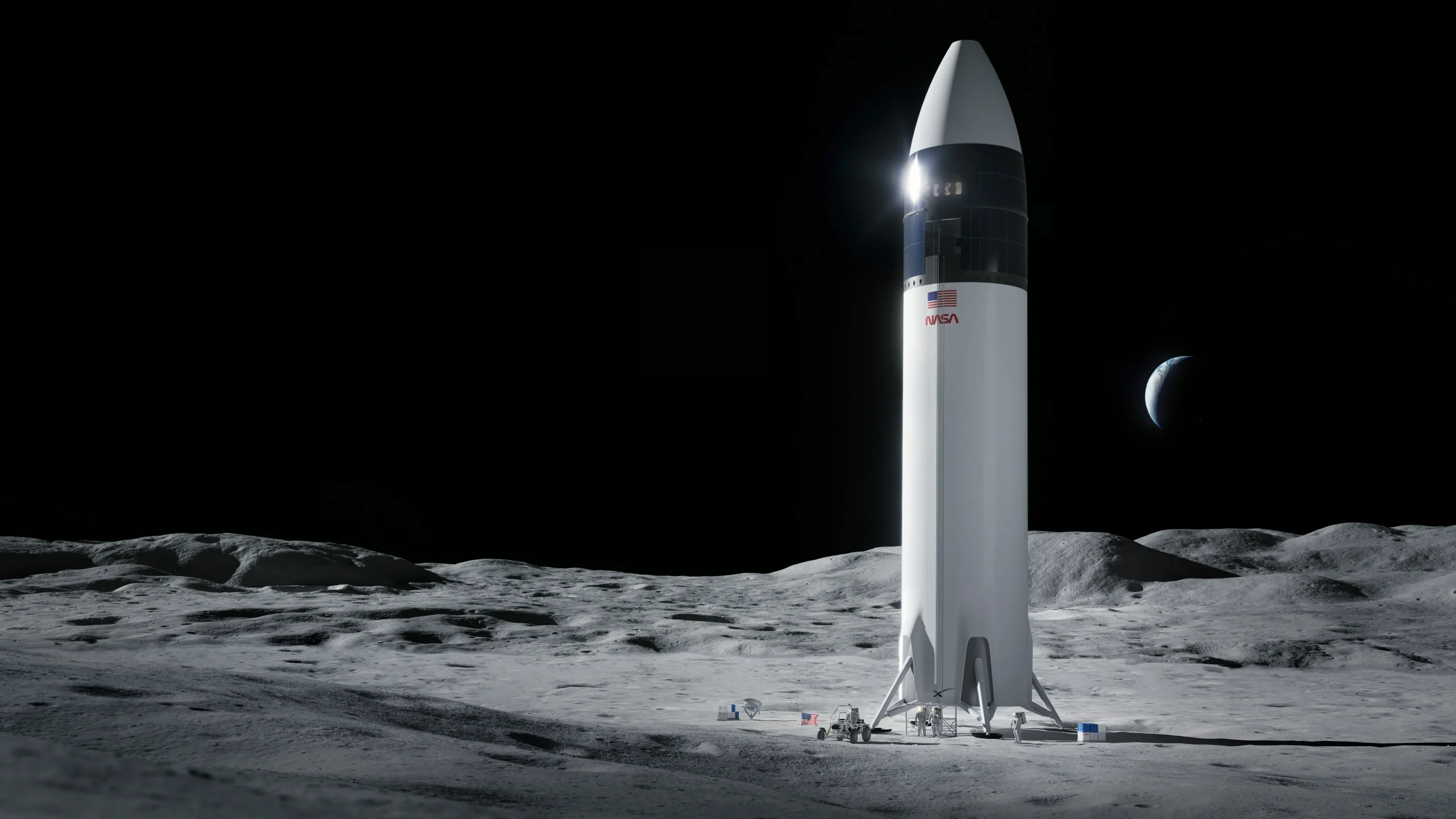
ppr-revolution.com – The Space Launch System (SLS), developed by NASA, represents a colossal step forward in human space exploration. As the most powerful rocket in the world, SLS is designed to take astronauts farther than ever before, opening new possibilities for deep space missions. This article delves into the capabilities, significance, and future plans of the SLS, showcasing how it is poised to become the backbone of America’s deep space exploration program.

The Powerhouse of Space Exploration:
The SLS is not just a rocket; it’s a marvel of engineering and a testament to human ambition. With its ability to lift more mass into space than any other rocket in history, the SLS is designed to carry the Orion spacecraft, astronauts, and cargo to the Moon, Mars, and beyond. The initial configuration of the SLS, known as Block 1, is capable of lifting 70 metric tons to low-Earth orbit, with future iterations aiming for even greater capacities.

A Vehicle for Deep Space:
The SLS is integral to NASA’s Artemis program, which aims to return humans to the Moon and establish a sustainable presence there by the end of the decade. The rocket will launch the Orion spacecraft on a journey that will take astronauts farther than they have ever traveled, enabling them to orbit the Moon and eventually land on its surface. The SLS is also the key to future Mars missions, providing the necessary power to send humans on the journey to the Red Planet.

Innovation and Sustainability:
The development of the SLS incorporates cutting-edge technologies and sustainable practices. The rocket’s core stage is powered by four RS-25 engines, which are partly derived from the Space Shuttle’s main engines. This not only leverages previous investments in space technology but also demonstrates NASA’s commitment to environmental stewardship. The SLS also features solid rocket boosters, the largest ever built, which are reusable and recoverable, contributing to a more sustainable approach to space exploration.

A Global Partnership:
The SLS is not just an American endeavor; it is a global project that involves international partners and suppliers. This collaborative approach ensures that the best minds and technologies from around the world contribute to the success of the SLS and its missions. The Artemis program, in particular, is an international effort, with countries from Europe, Canada, Japan, and other partners contributing to the development of the Orion spacecraft and other components of the mission.

The Future of Space Exploration:
The SLS is a critical component of NASA’s long-term vision for space exploration. As the agency looks to the Moon, Mars, and beyond, the SLS will be the workhorse that enables these ambitious missions. The rocket’s development is ongoing, with plans for upgrades and enhancements that will increase its payload capacity and efficiency. The SLS Block 1B, for example, will feature the Exploration Upper Stage, which will provide additional propulsion for more complex missions.

Conclusion:
The Space Launch System is more than a rocket; it is a symbol of human ingenuity and a tool for expanding our knowledge of the universe. As NASA continues to push the boundaries of what is possible, the SLS stands ready to carry the hopes and dreams of humanity to the stars. With each launch, the SLS will not only advance scientific discovery but also inspire future generations to reach for the stars. The SLS is not just the next giant leap for NASA; it is a giant leap for all of humanity as we venture into the cosmos.

Journey Through the Inner Solar System: The Rocky Planets

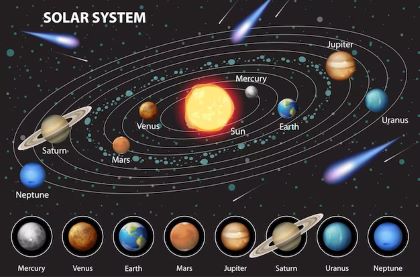
ppr-revolution.com – The inner solar system is home to the Rocky Planets, also known as the Terrestrial Planets. These are the four planets closest to the Sun: Mercury, Venus, Earth, and Mars. They are called “rocky” because they are composed primarily of silicate rocks and metals, which contrasts with the gas giants and ice giants that dominate the outer solar system. Here’s a brief journey through each of these fascinating worlds:

Mercury

Mercury is the smallest planet in our solar system and the closest to the Sun. It is named after the Roman messenger god, Mercury, known for his speed, because it moves quickly across the sky. Due to its proximity to the Sun, Mercury experiences extreme temperatures, with daytime temperatures reaching up to 430°C (800°F) and nighttime temperatures dropping to -180°C (-290°F). Despite its harsh environment, Mercury has a thin exosphere, a tenuously bound atmosphere composed of helium, hydrogen, oxygen, and sodium.

Venus

Venus is the second planet from the Sun and is similar in size to Earth, which has earned it the title of Earth’s “sister planet.” However, this resemblance is only superficial. Venus has a thick, toxic atmosphere composed primarily of carbon dioxide, with clouds of sulfuric acid. This atmosphere creates a runaway greenhouse effect, making Venus the hottest planet in our solar system, with surface temperatures around 465°C (870°F). The surface of Venus is covered in volcanic rock, with evidence of past volcanic activity.

Earth

Earth is the third planet from the Sun and the only known planet to support life. It has a unique combination of atmospheric conditions, liquid water, and a suitable climate that allows for the existence of a diverse biosphere. Earth’s atmosphere is composed primarily of nitrogen and oxygen, with trace amounts of carbon dioxide and other gases. The planet has one natural satellite, the Moon, which plays a crucial role in stabilizing Earth’s axial tilt and thus its climate.

Mars

Mars is the fourth planet from the Sun and is often referred to as the “Red Planet” due to its reddish appearance, which is caused by iron oxide (rust) on its surface. Mars has the largest mountain in the solar system, Olympus Mons, and the deepest, longest canyon system, Valles Marineris. It has a thin atmosphere composed mostly of carbon dioxide, with traces of water vapor. Mars has polar ice caps made of frozen water and carbon dioxide that change size with the seasons. The presence of water in its past has led to speculation about the possibility of past life on Mars, and it remains a prime target for the search for extraterrestrial life.

Exploration and Future Missions

The Rocky Planets have been the subject of numerous space missions. Mercury was explored by the MESSENGER spacecraft, Venus by the Magellan mission, Earth by various satellites and rovers, and Mars by several missions including the Mars rovers Spirit, Opportunity, Curiosity, and the Perseverance rover, which is currently searching for signs of ancient microbial life. Future missions aim to further explore these worlds, including potential crewed missions to Mars.

The journey through the inner solar system reveals a diverse set of worlds, each with its unique characteristics and challenges. These planets offer valuable insights into the formation and evolution of our solar system and the potential for life beyond Earth.